
 English
 Tiếng Việt


Non-Halogenated Flame Retardants: A Practical Guide for Polymer Formulators
Non-Halogenated Flame Retardants: A Practical Guide for Polymer Formulators
Non-Halogenated Flame Retardants: A Practical Guide for Polymer Formulators
Non-Halogenated Flame Retardants: A Practical Guide for Polymer Formulators
Non-Halogenated Flame Retardants: A Practical Guide for Polymer Formulators
Non-Halogenated Flame Retardants: A Practical Guide for Polymer Formulators
Non-Halogenated Flame Retardants: A Practical Guide for Polymer Formulators
Non-Halogenated Flame Retardants: A Practical Guide for Polymer Formulators
Non-Halogenated Flame Retardants: A Practical Guide for Polymer Formulators
Non-Halogenated Flame Retardants: A Practical Guide for Polymer Formulators
Non-Halogenated Flame Retardants: A Practical Guide for Polymer Formulators
Non-Halogenated Flame Retardants: A Practical Guide for Polymer Formulators
Non-Halogenated Flame Retardants: A Practical Guide for Polymer Formulators
Non-Halogenated Flame Retardants: A Practical Guide for Polymer Formulators
Non-Halogenated Flame Retardants: A Practical Guide for Polymer Formulators
Non-Halogenated Flame Retardants: A Practical Guide for Polymer Formulators

Industry News
Home / News / Industry News / Non-Halogenated Flame Retardants: A Practical Guide for Polymer Formulators
Product Category
NEW Category
Non-Halogenated Flame Retardants: A Practical Guide for Polymer Formulators
Content
Engineers and buyers use "halogen-free" and "non-halogenated" almost interchangeably, and in everyday conversation that is usually fine. The distinction starts to matter once you write it into a specification. Halogen-free generally describes a threshold, often 900 ppm or less of chlorine and bromine combined, while non-halogenated describes the chemistry itself: the flame retardant contains no chlorine or bromine at all. A formulation can be non-halogenated and still fail a halogen-free threshold if a pigment, stabiliser or processing aid carries traces of halogenated contamination.
What follows is a practical walkthrough of the non-halogenated options we work with day to day, written from the formulation bench rather than the brochure: what each family does well, where it struggles, and how to narrow the choice before you spend money on a trial.
What Non-Halogenated Flame Retardants Actually Are
Brominated and chlorinated additives work largely in the gas phase. They release radical species that interrupt the combustion chain reaction, which is why they are so effective at low loadings and why formulators reached for them for decades. The trade-off is well known: dense smoke, corrosive acidic gases, and in some cases substances that regulators have since restricted.
Non-halogenated systems attack the fire from the condensed phase instead. They cool the polymer through endothermic decomposition, dilute the fuel with water vapour or inert gas, and build a char layer that insulates the underlying material and slows heat release. The practical consequences are consistent across almost every project: higher loadings, usually somewhere between 20 and 65 percent by weight; a greater sensitivity to dispersion quality; and a hard ceiling on processing temperature, because you cannot run the melt anywhere near the additive's decomposition onset.
The Main Families You Will Meet Most Often
Almost every non-halogenated product on the market belongs to one of four groups, or is a blend of them. The table below is the shorthand version we use when a customer sends over an application brief.
| Family | Typical chemistry | How it works | Where it fits best |
|---|---|---|---|
| Mineral fillers | Aluminium hydroxide, magnesium hydroxide, brucite, hydromagnesite | Endothermic decomposition, water release, fuel dilution | PP, PE, EVA, cable compounds, PVC, thermosets |
| Phosphorus-based | Ammonium polyphosphate, phosphonates, red phosphorus | Char promotion and dehydration of the polymer | PP, PA, intumescent coatings, adhesives |
| Nitrogen-based | Melamine, melamine cyanurate, melamine phosphates | Inert gas release, dilution, endothermic cooling | Unfilled PA, polyurethane, coatings |
| Char promoters and nanoclays | Organic montmorillonite, sepiolite, attapulgite | Catalytic char formation, barrier layer at low dosage | Synergist alongside mineral or phosphorus systems |
| Composite systems | Formulated blends of the above | Combined condensed-phase and gas-phase action | Inks, pressure-sensitive adhesives, PA, PP, PVC film |
In practice most commercial formulations are hybrids: a mineral base carries the bulk of the loading, a phosphorus or nitrogen component sharpens the char, and a small dose of a char promoter ties the structure together. That is why experienced suppliers talk about systems rather than single products.
Mineral Systems: The Workhorses
Aluminium hydroxide and magnesium hydroxide account for the largest share of non-halogenated volume, and for good reason: they are abundant, comparatively inexpensive, and produce almost no toxic smoke. The catch is the temperature window. Aluminium hydroxide begins to decompose around 180 to 200 degrees Celsius and releases roughly a third of its mass as water, which confines it to PVC, EVA, thermosets and low-temperature thermoplastics. Magnesium hydroxide starts giving up water closer to 330 degrees Celsius, which opens the door to PP, PA and PBT.
Brucite, hydromagnesite and the natural mineral route
Brucite is a naturally occurring magnesium hydroxide. Well-selected ore gives high whiteness and low iron content, which matters when the final part is light-coloured or when the compound has to survive a colour match. Hydromagnesite releases both water and carbon dioxide as it decomposes, and formulators often use it where smoke suppression is as important as flame spread. Natural minerals vary from batch to batch, so whiteness, purity and loss-on-ignition specs deserve more attention than they usually get.
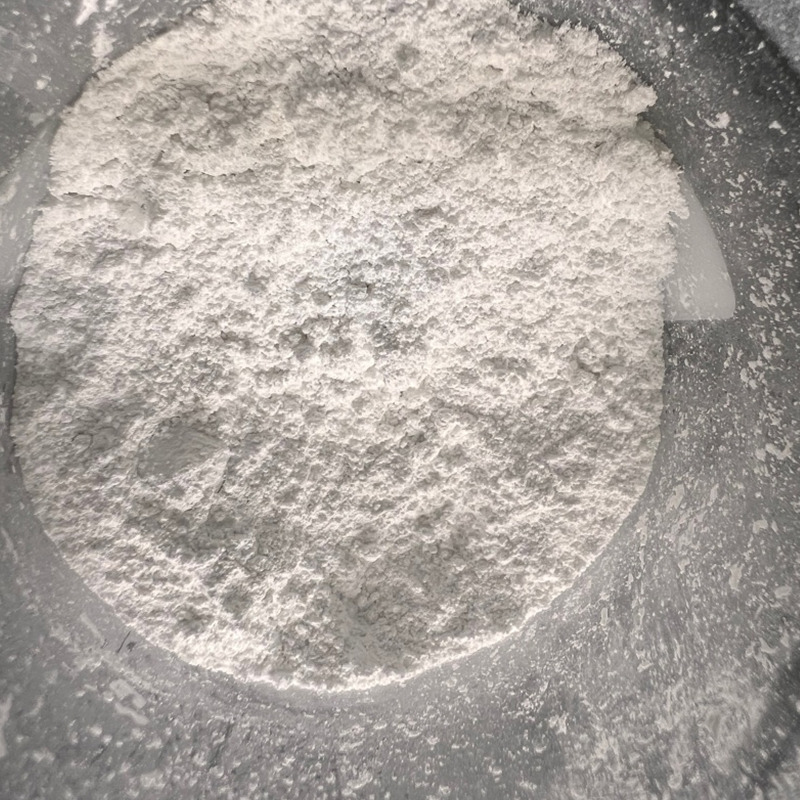
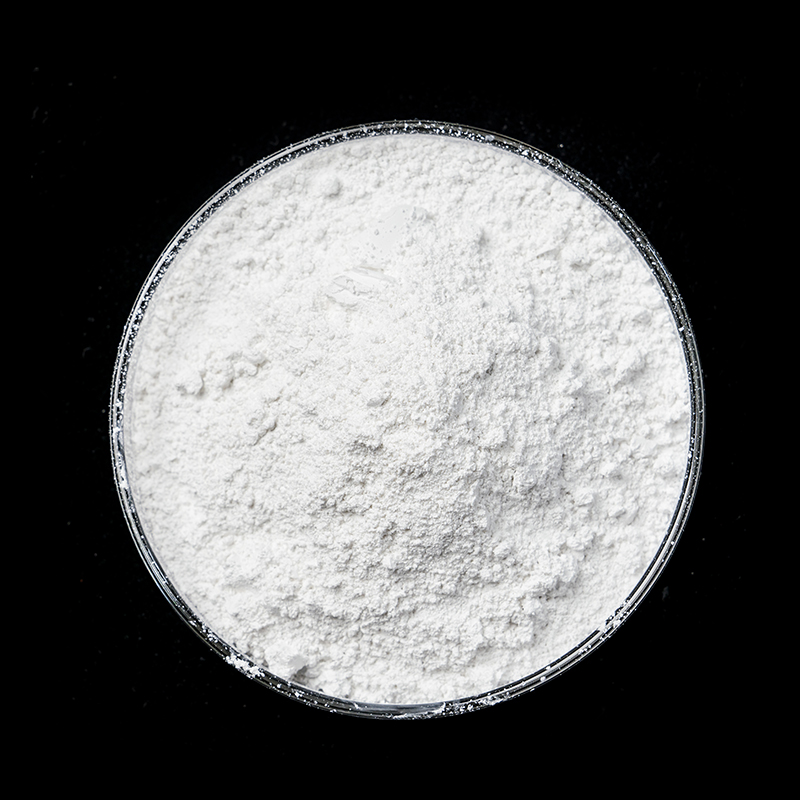 ZF-83 Natural Brucite Magnesium Hydroxide Flame RetardantHigh-whiteness, mineral-sourced magnesium hydroxide grade for halogen-free flame retardancy in polyolefins, PVC and elastomers, with surface-treatment options for dispersion and mechanical balance.View Product →
Particle size, surface treatment and loading
Finer particles generally deliver more flame retardancy per kilogram, because decomposition happens over a larger surface area and the char layer packs more tightly. But ultrafine grades also raise melt viscosity, generate dust, and are harder to disperse without agglomerates that later show up as surface defects. A silane or stearate surface treatment is not cosmetic; it changes wetting in polyolefins and can be the difference between 55 and 62 percent loading at the same impact performance. For a V-0 rating at 1.6 mm in PP, loadings of 50 to 65 percent by weight are typical, and mechanical data at those loadings should always be requested before a trial.
Phosphorus, Nitrogen and Char-Forming Additives
Ammonium polyphosphate systems are the best-known intumescent route. An acid source, a carbon source and a blowing agent work together to expand into a thick, insulating char when exposed to heat. They suit PP, cable compounds and coatings, and they usually achieve their rating at lower total loading than minerals, though they bring their own sensitivities to moisture and to water soaking.
Red phosphorus remains one of the most efficient additives for glass-filled PA, where mineral fillers struggle to reach the required rating at acceptable loading. Colour and handling are the usual objections. Melamine cyanurate, by contrast, is a clean choice for unfilled PA: it releases inert gas, cools the flame zone and leaves a modest char without the colour penalty.
Char promoters are where small dosages earn their place. Organically modified montmorillonite, sepiolite and attapulgite all catalyse char formation and reinforce the barrier layer. Adding two to eight percent to a mineral or intumescent system often lets you reduce the main flame retardant loading, which recovers some of the mechanical properties you lost. Dispersion is critical at these dosages: an undispersed clay is a stress concentrator that does nothing for fire performance.
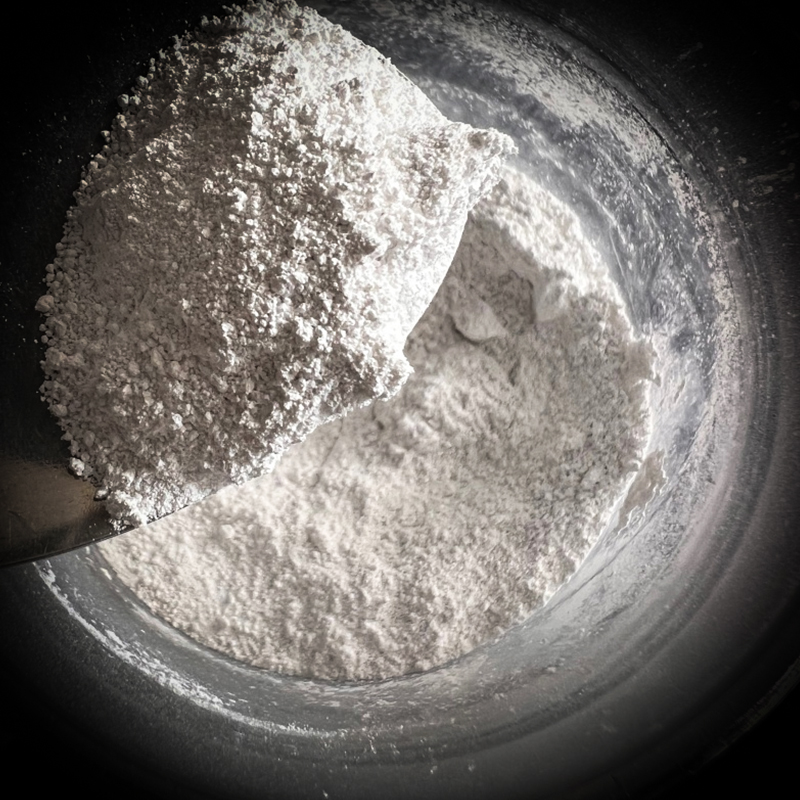
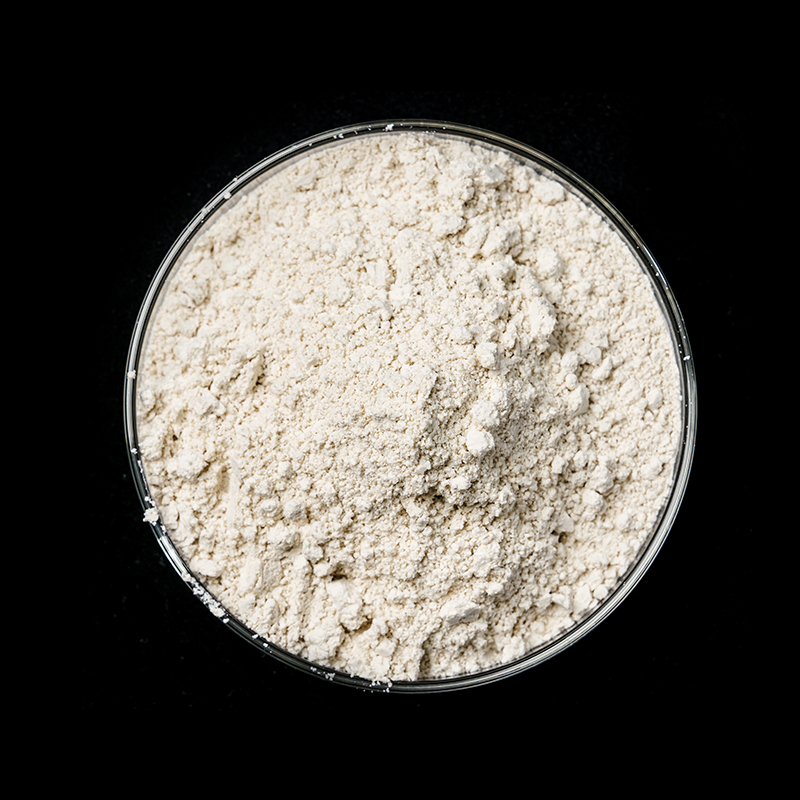 ZF-C-125 Sepiolite Charring Agent for Halogen-Free SystemsLow-dosage sepiolite char promoter for polyolefins and elastomers, supporting char formation, smoke suppression and barrier integrity in halogen-free flame-retardant compounds.View Product →
Matching the Chemistry to Your Polymer
The polymer decides more of the answer than the datasheet does. A short working map:
- PP and filled PP: magnesium hydroxide or brucite at high loading, or an intumescent phosphorus system when loading budget is tight. Impact strength is the usual casualty, so impact modifiers and compatibilisers belong in the first trial, not the third.
- PA6 and PA66: melamine cyanurate for unfilled grades; red phosphorus or a fine magnesium hydroxide for glass-filled grades. Drying discipline matters more than with halogenated systems, since many phosphorus additives are moisture sensitive. Our engineering plastics application notes cover the compounding side in more detail.
- PVC and flexible film: aluminium hydroxide combined with a non-antimony synergist. Antimony trioxide replacement packages have become a practical route where the supply chain or cost of ATO is a concern.
- EVA and cable compounds: aluminium hydroxide or magnesium hydroxide at 55 to 65 percent, frequently with a silicone or nanoclay synergist to protect elongation at break. The cable harness application page walks through typical requirements.
- TPE and elastomers: halogen-free packages that preserve transparency, low odour and overmoulding adhesion, which is a different design problem from simply hitting a rating.
- Inks and pressure-sensitive adhesives: fine, low-grit systems that do not disturb gloss, tack or printability, usually supplied as ready-to-use composites.
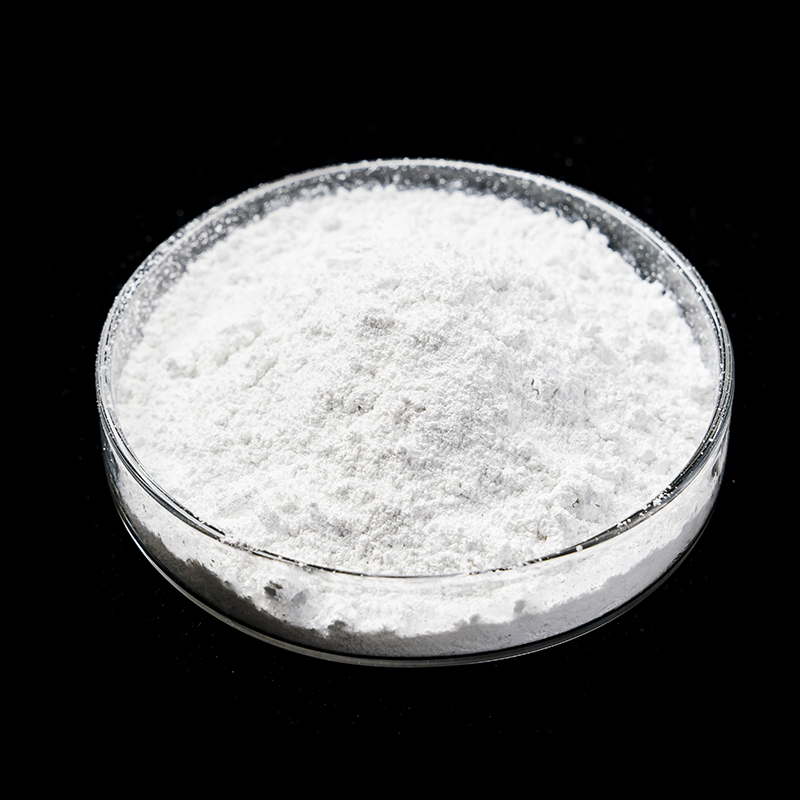 ZF-V70 Antimony Trioxide Replacement for PVC Flame RetardancyATO replacement synergist for PVC insulation, film and flexible PVC, with typical Sb₂O₃ content ≥34.5% and RoHS/REACH compliance.View Product →
A Practical Selection Checklist
Before requesting samples, it helps to have answers to the following. Most failed trials trace back to one of these being skipped.
- Define the exact test: standard, specimen thickness, conditioning, and whether smoke density or toxicity is also assessed.
- Confirm the melt processing temperature and residence time, and leave a safety margin below the additive's decomposition onset.
- Set a loading budget and decide which mechanical property you are willing to trade, and by how much.
- Check the dispersion equipment available: twin-screw compounding, masterbatch let-down, or simple dry blending.
- Review smoke, corrosion and toxicity requirements for the end application, not just flame spread.
- Verify regulatory status against RoHS, REACH and any customer-specific halogen limits, including contaminants from colourants.
- Plan ageing, humidity and water-soak testing early, because many non-halogenated systems lose performance after conditioning.
Pitfalls We See Most Often
- Judging a candidate on limiting oxygen index alone. A high LOI with heavy smoke or dripping is not a pass.
- Compensating for poor dispersion by adding more additive, which costs money and damages mechanicals without improving the rating.
- Mixing grades from different suppliers in one trial, then being unable to tell which change helped.
- Ignoring surface treatment and then blaming the filler for poor elongation.
- Testing only the neat compound, when the real part has weld lines, thin walls and colour masterbatch in it.
We have been formulating and producing non-halogenated flame retardants since 2020, and the pattern we see is consistent: the chemistry is rarely the hard part. The hard part is fitting a system into an existing process, a fixed loading budget and a cost target all at once. That is why our application laboratory exists, and why we would rather send a smaller sample with honest processing guidance than a large one with a generic datasheet.
If you are weighing mineral fillers against an intumescent route, or trying to replace antimony trioxide without losing efficiency, send us the polymer, the processing window and the rating you need. A short conversation usually narrows the field to two or three candidates, and that is where a trial becomes worth running.
PREV:No previous article
NEXT:diethylphosphate: Applications, Selection Criteria, and Practical Guidance
NEXT:diethylphosphate: Applications, Selection Criteria, and Practical Guidance
Interested in cooperation or have questions?
Featured Products

Let'S Work Together Welcome Aboard!
-
Oversea Sales: mayuqin@zhuofengfr.com
Company email: rikkima@zhuofengfr.com
-
WhatsApp: +86 18105180388
-
Address: No. 5, Wutai Road, Dongba Street, Gaochun District, Nanjing City, Jiangsu Province, China
Join Our Mailing List
Product Categories
Quick Links
Quick Links
Copyright © Jiangsu Zhuofeng New Materials Technology Co., Ltd.
All Rights Reserved.
 Environmentally Friendly Flame Retardants Manufacturers