
 English
 Tiếng Việt

product
product
product
product
product
product
product
product
product
product
product
product
product
product
product
product

VDT TPE
Product Category
Contact us
VDT TPE Manufacturers
information to be updated
Jiangsu Zhuofeng New Materials Technology Co., Ltd.
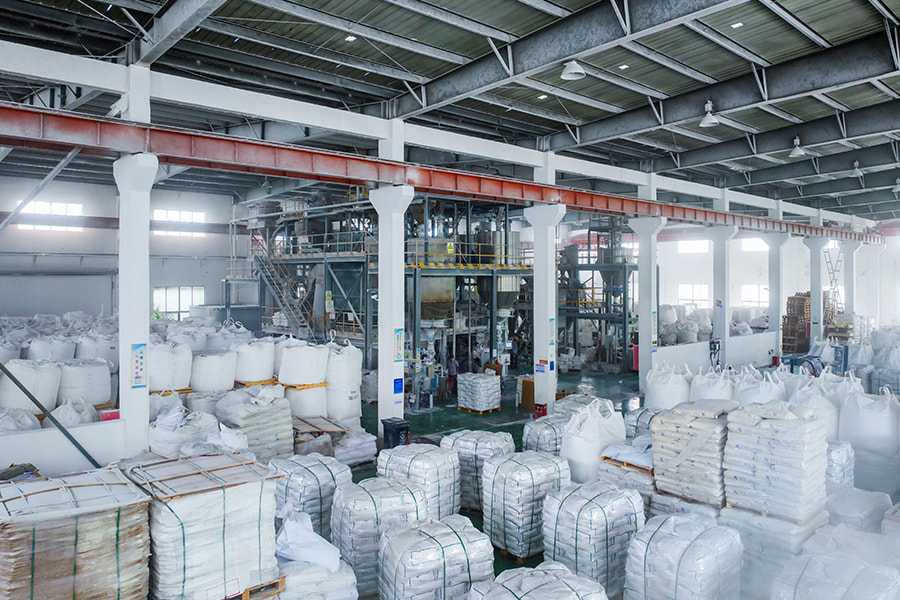
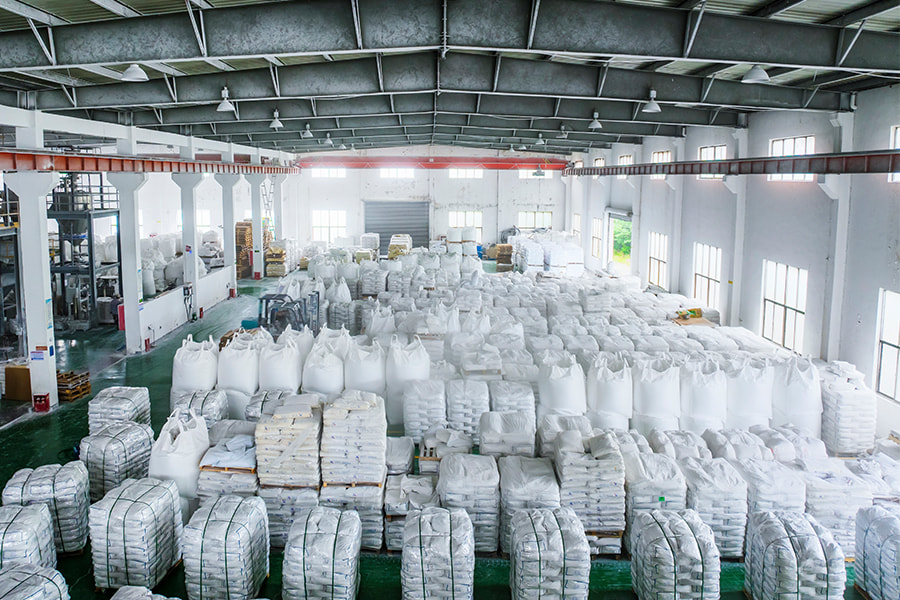
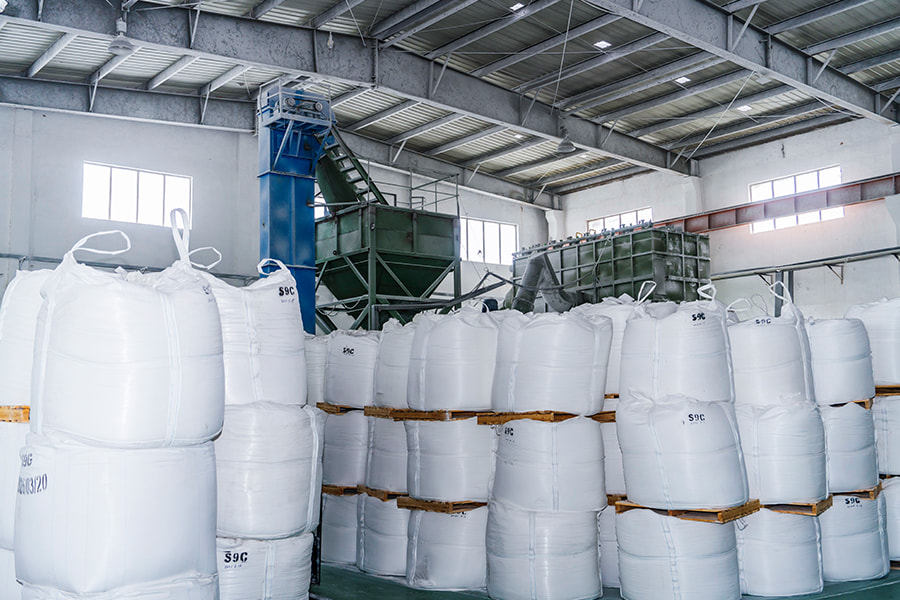
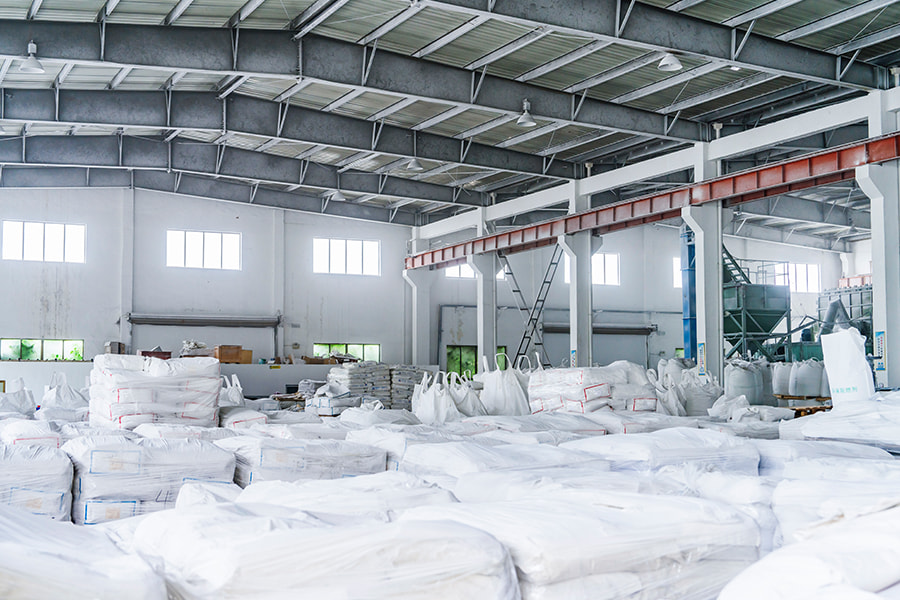
Jiangsu Zhuofeng New Materials Technology Co., Ltd. was established in 2020. It is a supplier specializing in the research, production, and marketing of high-performance and environmentally friendly flame retardants. The company's main products include environmentally friendly flame retardants, flame retardant masterbatches, char-forming agents, composite flame retardants, magnesium oxide, etc. VDT TPE Manufacturers and VDT TPE Factory. Relying on mature products and process technologies as well as standardized management, the company has established several mature high-purity, ultra-fine, and cost-effective flame retardant production lines, established a flame retardant polymer material application testing laboratory, and has carried out industry-university-research cooperation to develop and optimize flame retardant products. The founding team of Zhuofeng Technology has gathered a group of talents who have long been engaged in the research, production, marketing, and management of various functional materials. They can provide users with prompt technical support for application use. At Zhuofeng Technology, we are dedicated to meeting our customers' needs by delivering stable, high-performance, and environmentally friendly flame-retardant product lines. Custom VDT TPE. Company strength data: Industry Experience: 6 years; Plant Scale: 18,000 square meters; Production Capacity:20000 tons.
-
2020Year
Establishment
-
18000m²
Plant Area
-
20000ton
Production Capacity
 Read More

Factory Show


Message Feedback
Industry Insights and Updates
-
2026-09-03Industry News
-
2026-08-28Industry News
-
2026-08-19Industry News
Industry Knowledge
Industry Knowledge
How Flame Retardant Loading Affects Damping Factor in Vibration-Damping TPE
Vibration-damping TPE relies on its viscoelastic behavior, specifically a well-tuned loss factor across the target frequency and temperature range, to convert mechanical vibration energy into heat rather than transmitting it through the material. Flame retardant fillers introduce rigid or semi-rigid particles into this viscoelastic matrix, and depending on loading level and particle characteristics, this can either broaden or narrow the effective damping temperature window, sometimes shifting the peak loss factor to a different temperature than the unfilled formulation was originally tuned for. This makes flame retardant integration in damping TPE fundamentally different from flame retardant integration in structural or cosmetic TPE parts, since the primary functional property being protected is a dynamic mechanical characteristic rather than static strength or appearance.
Damping-related properties requiring re-validation after flame retardant addition
- Peak loss factor (tan delta) value and the temperature at which it occurs, measured via dynamic mechanical analysis across the application's service temperature range
- Width of the effective damping temperature window, since a narrower window may fail to cover the full range of operating conditions the part will experience
- Storage modulus behavior across frequency, particularly relevant for applications experiencing a range of vibration frequencies rather than a single fixed frequency
- Long-term damping performance retention after thermal cycling, since some flame retardant systems can gradually shift viscoelastic behavior with repeated heat exposure
DMA testing at the actual flame retardant loading level intended for production, rather than relying on the unfilled TPE's published damping curve, is essential, since damping performance can shift meaningfully even at flame retardant loading levels that leave hardness and tensile properties largely unchanged.
Selecting Low-Interference Flame Retardant Chemistry for Damping-Critical Applications
Because damping performance is sensitive to filler content and particle characteristics, the choice of flame retardant chemistry carries more weight in vibration-damping TPE than it typically does in applications where mechanical or flame properties alone are the priority. Lower-loading flame retardant systems generally introduce less disruption to the viscoelastic network than high-loading mineral hydroxide systems, though the tradeoff between loading level, cost, and achievable flame rating still needs to be evaluated on a case-by-case basis for each target application.
Relative damping interference by flame retardant type
| Flame Retardant Type | Typical Loading | Damping Curve Interference |
| Mineral Hydroxide | 50-60% | High, often shifts peak temperature noticeably |
| Red Phosphorus (encapsulated) | 8-15% | Low to moderate |
| Liquid Phosphate Ester | 10-20% | Low, may even broaden damping window due to plasticization |
Interestingly, some liquid phosphorus-based flame retardants that act as mild plasticizers can actually broaden the damping temperature window rather than narrowing it, which is worth exploring as a formulation option when the target application needs damping performance across an unusually wide temperature range.
Frequency-Dependent Testing Requirements When Adding Flame Retardants to Damping TPE
Vibration-damping applications rarely experience a single fixed vibration frequency in service, and flame retardant filler content can affect damping performance differently across a frequency spectrum than it does at a single test frequency, making single-point testing an inadequate basis for qualification in most real-world applications. A formulation that shows acceptable loss factor at a commonly used reference frequency such as 10 Hz may perform noticeably differently at higher frequencies relevant to certain automotive or electronic equipment vibration sources, and this frequency dependence can shift once flame retardant filler is introduced into a previously optimized formulation.
Recommended frequency testing approach for flame retardant damping compounds
- Testing across a frequency sweep representative of the actual vibration source in the end application, rather than relying on a single standard test frequency
- Comparing frequency-dependent behavior before and after flame retardant addition to identify whether interference is uniform or concentrated at specific frequency ranges
- Combining frequency sweep testing with temperature sweep testing where the application experiences both variables simultaneously, such as automotive engine bay components
- Documenting the specific frequency and temperature conditions used in qualification testing so results can be properly compared against the application's actual service profile
Requesting the flame retardant supplier's application lab to test under conditions matching the customer's actual vibration profile, rather than a generic reference condition, produces qualification data that is far more predictive of real-world field performance.
Managing Compression Set in Flame Retardant Damping TPE Used for Gaskets and Mounts
Vibration-damping TPE used in gasket and mounting applications often needs to maintain sustained compression over long service periods without significant permanent deformation, since compression set directly reduces the material's ability to maintain contact pressure and continue damping effectively over time. Flame retardant filler content can worsen compression set behavior, particularly at elevated temperature, since rigid filler particles do not participate in the elastic recovery mechanism the surrounding polymer network relies on, effectively reducing the proportion of the compound actively contributing to recovery after compression.
Approaches to managing compression set in filled damping compounds
- Testing compression set at both room temperature and the elevated temperature relevant to the application's actual service environment
- Evaluating whether a lower flame retardant loading combined with a synergist can achieve the target flame rating with less compression set penalty
- Selecting flame retardant particle shapes and surface treatments that minimize disruption to the elastic recovery network, where formulation flexibility allows
- Extending compression set testing duration to match or exceed the expected service life interval rather than relying only on short-duration standard test protocols
For long-service-life gasket and mounting applications, requesting compression set data at multiple time intervals rather than a single endpoint measurement gives a clearer picture of whether deformation is stabilizing or continuing to progress over the material's expected service duration.
Coordinating Flame Retardant Selection With Automotive and Electronics Damping Specifications
Vibration-damping TPE used in automotive and electronic equipment applications frequently needs to satisfy both a specific flame retardant classification, often UL94 V-0 or an automotive-specific equivalent, and detailed damping performance targets defined by acoustic or vibration engineering teams working somewhat independently from the materials selection process. This organizational separation can lead to a formulation being selected primarily for flame compliance without adequate involvement from the vibration engineering team, resulting in a material that passes flame testing but underperforms on the acoustic or vibration target that was the original purpose of specifying a damping material in the first place.
Coordination practices that help avoid this gap
- Involving both materials engineering and vibration or acoustic engineering teams in flame retardant selection discussions from the early formulation stage
- Sharing the target damping specification, including frequency and temperature range, directly with the flame retardant supplier rather than only communicating the flame rating requirement
- Requesting combined test reports that show both flame performance and DMA damping data on the same formulation sample
- Building in a formal review checkpoint where both flame and damping test results are evaluated together before advancing a formulation to production tooling
Establishing this joint review checkpoint early avoids the more costly scenario of discovering a damping shortfall after tooling investment has already been made based on a formulation qualified for flame performance alone.
Batch Consistency Requirements for Damping-Critical Flame Retardant TPE Programs
Damping performance is generally more sensitive to minor formulation variability than flame rating or basic mechanical properties, since even small shifts in filler dispersion or loading can measurably move the peak loss factor temperature or reduce the height of the damping peak. This makes batch-to-batch consistency in flame retardant raw material a more demanding requirement for damping-critical programs than for applications where flame retardant loading has some tolerance margin before performance is meaningfully affected.
Consistency controls worth establishing for damping applications
- Tighter flame retardant loading tolerance specifications specifically for damping-critical production runs
- Periodic DMA spot-checking of production batches against the original qualification curve, not only mechanical and flame testing at batch release
- Reviewing particle size distribution consistency between flame retardant raw material lots, since dispersion quality directly affects damping curve reproducibility
- Establishing an agreed acceptable range for peak loss factor and peak temperature shift, rather than assuming any batch meeting flame and mechanical specification will automatically meet damping specification as well
Working with a flame retardant supplier that operates high-purity, tightly controlled production lines and maintains an in-house application testing laboratory gives damping-critical programs a better foundation for catching batch variability before it reaches the customer's production line, where diagnosing a damping shortfall after the fact is considerably more time-consuming.
Let'S Work Together Welcome Aboard!
-
Oversea Sales: mayuqin@zhuofengfr.com
Company email: rikkima@zhuofengfr.com
-
WhatsApp: +86 18105180388
-
Address: No. 5, Wutai Road, Dongba Street, Gaochun District, Nanjing City, Jiangsu Province, China
Join Our Mailing List
Product Categories
Quick Links
Quick Links
Copyright © Jiangsu Zhuofeng New Materials Technology Co., Ltd.
All Rights Reserved.
 VDT TPE Factory
VDT TPE Factory