
 English
 Tiếng Việt


Antimony III Oxide: Chemistry, Flame Retardant Uses, Safety, and Alternatives
Antimony III Oxide: Chemistry, Flame Retardant Uses, Safety, and Alternatives
Antimony III Oxide: Chemistry, Flame Retardant Uses, Safety, and Alternatives
Antimony III Oxide: Chemistry, Flame Retardant Uses, Safety, and Alternatives
Antimony III Oxide: Chemistry, Flame Retardant Uses, Safety, and Alternatives
Antimony III Oxide: Chemistry, Flame Retardant Uses, Safety, and Alternatives
Antimony III Oxide: Chemistry, Flame Retardant Uses, Safety, and Alternatives
Antimony III Oxide: Chemistry, Flame Retardant Uses, Safety, and Alternatives
Antimony III Oxide: Chemistry, Flame Retardant Uses, Safety, and Alternatives
Antimony III Oxide: Chemistry, Flame Retardant Uses, Safety, and Alternatives
Antimony III Oxide: Chemistry, Flame Retardant Uses, Safety, and Alternatives
Antimony III Oxide: Chemistry, Flame Retardant Uses, Safety, and Alternatives
Antimony III Oxide: Chemistry, Flame Retardant Uses, Safety, and Alternatives
Antimony III Oxide: Chemistry, Flame Retardant Uses, Safety, and Alternatives
Antimony III Oxide: Chemistry, Flame Retardant Uses, Safety, and Alternatives
Antimony III Oxide: Chemistry, Flame Retardant Uses, Safety, and Alternatives

Industry News
Home / News / Industry News / Antimony III Oxide: Chemistry, Flame Retardant Uses, Safety, and Alternatives
Product Category
NEW Category
Antimony III Oxide: Chemistry, Flame Retardant Uses, Safety, and Alternatives
Content
Antimony III oxide seldom gets top billing in a formulation meeting, yet it quietly decides whether a flame retardant system passes or fails. We have spent years blending, testing and occasionally arguing with this white powder, and the questions customers ask about it are remarkably consistent: what is it, why does such a small addition matter so much, and what do we do now that halogen-free specifications keep landing on our desks? This article walks through the chemistry, the practical use patterns and the honest trade-offs, so you can judge where antimony trioxide still earns its place in your product.
Antimony(III) Oxide at a Glance
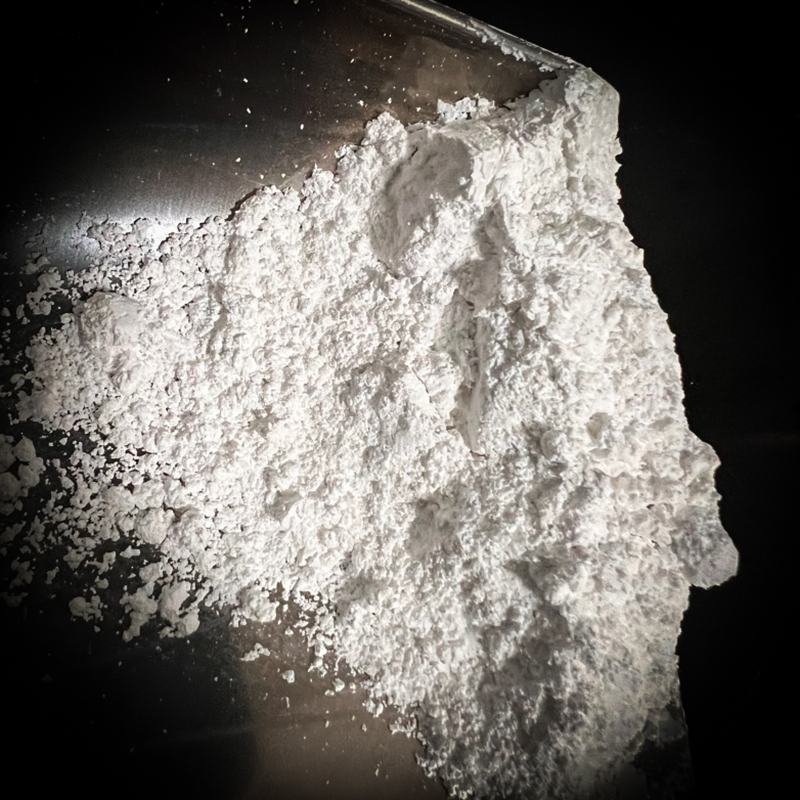
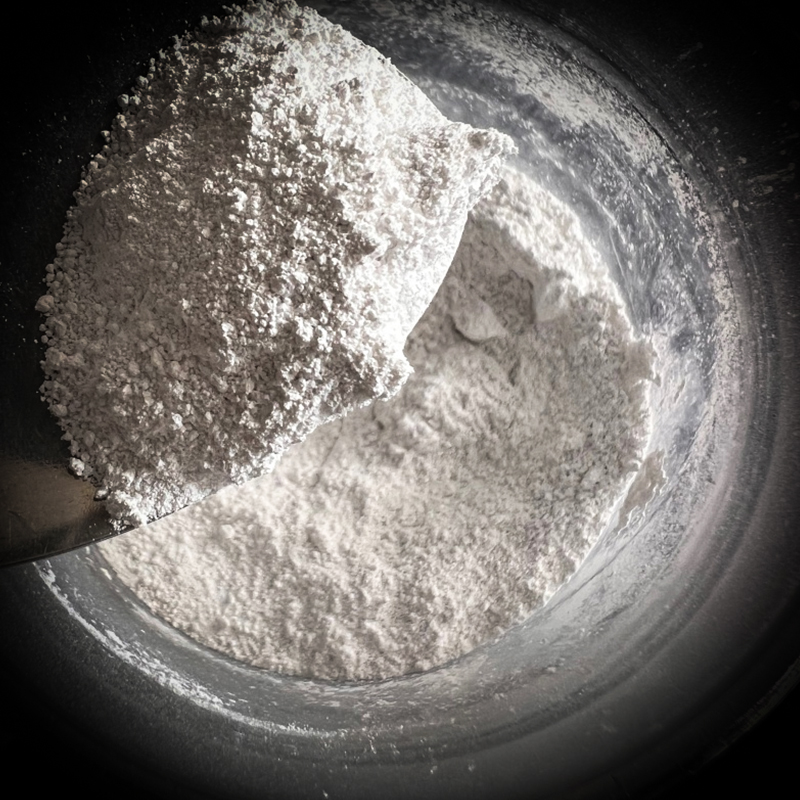
Antimony(III) oxide, written as Sb2O3 and listed under CAS 1309-64-4, is the inorganic compound most people mean when they say "antimony oxide" or "ATO". It is a white crystalline powder with a density close to 5.2 g/cm³ and a melting point around 656 °C. It is practically insoluble in water, which is one reason it survives processing so well in polymer systems, and it is by far the most commercially significant antimony compound in the world.
Most of the material on the market starts life as stibnite, the antimony sulfide ore. Roasting converts the sulfide to oxide, and antimony metal can also be oxidised directly. Crude oxide is then refined, usually by dissolving and re-precipitating or by re-volatilising, to strip out iron, lead and arsenic. That purification step is where grades diverge sharply: whiteness, particle size and trace metal content all trace back to how carefully the refiners worked.
Two crystal forms matter in practice. Senarmontite is the cubic form and is stable at ordinary temperatures; valentinite is orthorhombic and appears at higher temperatures or under particular precipitation conditions. Both function as flame retardant synergists, but their particle size distribution and surface area differ, and those differences show up in dispersion quality and in the final colour of the compound.
- Formula: Sb2O3, the most important commercial antimony compound
- Appearance: white to off-white powder, high whiteness grades available
- Density: approximately 5.2 g/cm³
- Melting point: about 656 °C
- Solubility: essentially insoluble in water, soluble in strong acids and alkalis
Why Such a Small Loading Does So Much Work
Antimony trioxide is not a flame retardant on its own. It is a synergist, and it only performs when a halogen source is present. During combustion, hydrogen halides released from brominated or chlorinated flame retardants react with the antimony oxide to form antimony halides and antimony oxyhalides. These species enter the gas phase, where they interrupt the radical chain reactions that keep a flame alive, and they also help build a heavier, more protective vapour layer over the burning surface.
The practical consequence is dosage. Where aluminium hydroxide or magnesium hydroxide might need 50 to 60 parts per hundred resin, antimony trioxide typically works at 2 to 5 phr, balanced against the halogen at roughly a 3:1 to 4:1 halogen-to-antimony ratio by weight. That efficiency is exactly why the additive became so entrenched in PVC cable compounds, rubber goods and halogenated engineering plastic systems.
The halogen dependency
There is no way around it: without halogen, antimony trioxide is largely inert as a flame retardant. If your specification has moved to halogen-free, the synergist question disappears and the conversation shifts to mineral fillers, phosphorus chemistry and intumescent charring systems. That single fact drives most of the substitution work we do with customers today.
Where Antimony Trioxide Earns Its Place
The table below summarises the applications where we still see antimony trioxide specified, and the practical detail that usually decides whether it works well or badly.
| Application area | Host material | Role of the oxide | Practical note |
|---|---|---|---|
| Wire and cable jacketing | Flexible PVC | Synergist with brominated or chlorinated systems | Dosage is set by halogen content, not by filler loading |
| Conveyor belts and rubber goods | NR, SBR, CR blends | Slows flame spread in halogenated systems | Pre-weighed composites reduce dust and weighing errors |
| Engineering plastics | PA, PBT, ABS | Maintains flame ratings with limited mechanical loss | Check processing temperature and dispersion quality |
| Coatings, inks, adhesives | Acrylic, PU, PSA | Flame retardancy in back coatings and films | Halogen-free routes usually skip antimony entirely |
| Glass, enamels, glazes | Frits and pigments | Opacifier and pigment component | Different grade from flame retardant material |
| PET polymerisation | PET resin | Catalyst in the antimony glycolate route | Catalyst grade with tight trace metal limits |
Two of these areas come up most often in our inbox. For engineering plastics, the challenge is nearly always balancing flame rating against impact strength, and the synergist level is the first knob we adjust. For cable harness compounds, the conversation usually starts with the halogen source and works backwards to the antimony ratio.
Safety and Regulatory Questions We Hear Most
Antimony trioxide is a dust hazard, and it is regulated accordingly. The International Agency for Research on Cancer classifies it in Group 2B as possibly carcinogenic to humans, based primarily on inhalation studies in animals. It appears on California's Proposition 65 list, and under EU CLP it carries a suspected carcinogen classification. Workplace exposure limits exist in most industrial jurisdictions, and they apply to respirable dust rather than to the finished article.
In day-to-day production, that means closed transfer where possible, local exhaust ventilation at weighing stations, appropriate respiratory protection and routine air monitoring. Once the oxide is dispersed and bound inside a cured polymer matrix, the exposure scenario is a different one, which is why fabricators and compounders often have quite different obligations. We always recommend that customers check the current classification and any local limit directly, because these frameworks are revised periodically and the details matter.
When Replacing ATO Actually Makes Sense
Cost and supply are the usual triggers. Antimony is a relatively concentrated raw material market, prices move sharply, and that volatility is uncomfortable for anyone quoting a twelve-month contract. Regulatory scrutiny adds a second push, and the halogen-free trend a third. But substitution only makes sense if the replacement chemistry matches the fire test you actually have to pass.
For customers who want to keep a halogenated system but reduce or eliminate pure antimony trioxide handling, we supply composite synergist grades that arrive ready to weigh. These are pre-dispersed products rather than neat powder, which simplifies dosing and cuts dust exposure at the same time.
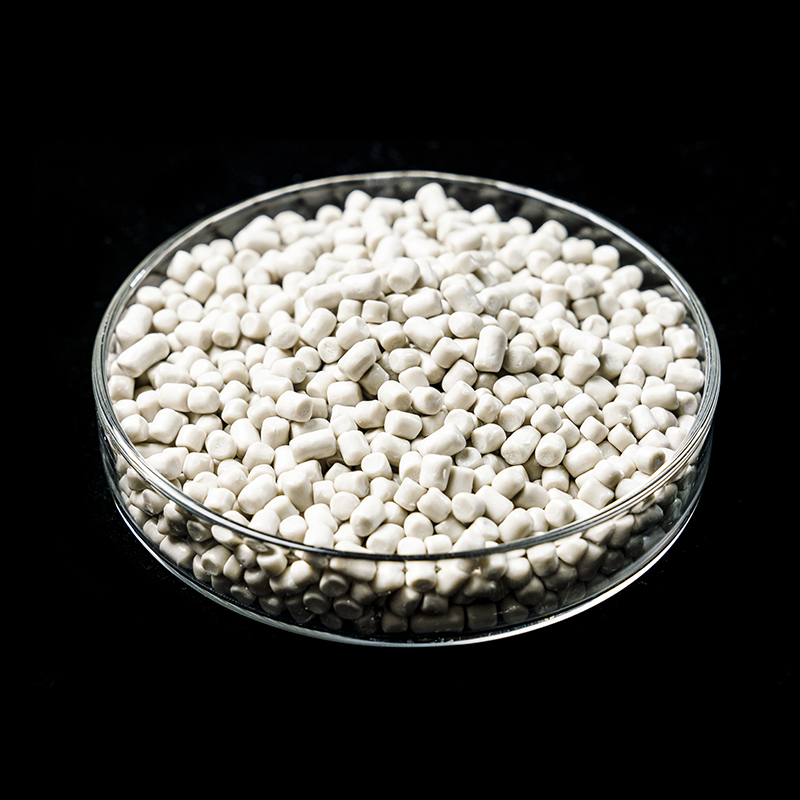
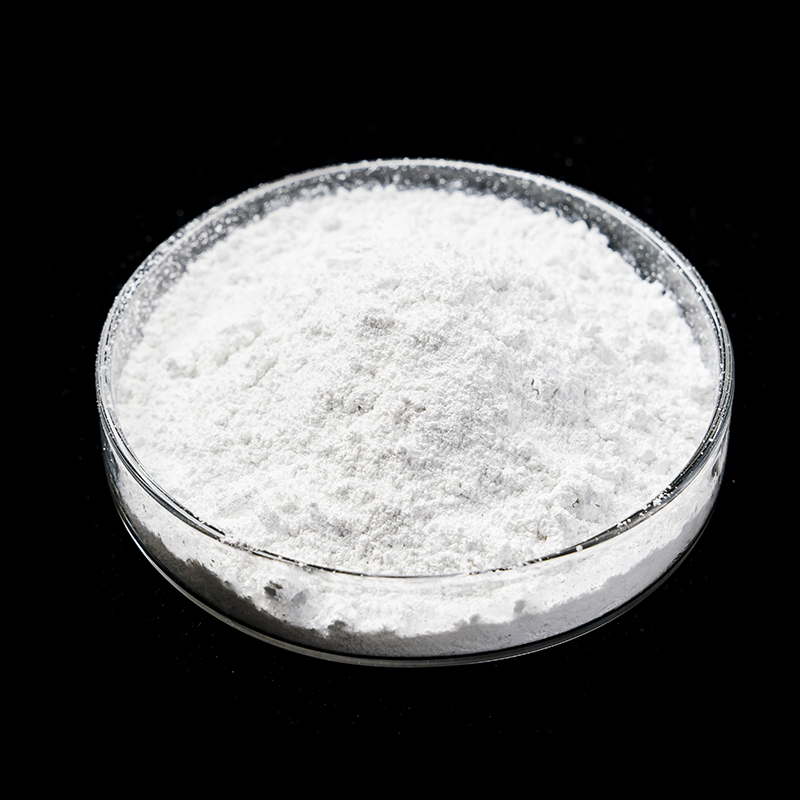 ZF-V70 Composite Antimony Trioxide Replacement for PVCA ready-to-weigh composite synergist for PVC systems seeking lower-cost ATO replacement while simplifying dosing and reducing dust exposure.View Product →
Where the target is a flexible PVC film or sheet and the budget is tight, a lower-cost composite route often fits better than a high-purity single-component oxide, particularly when the flame test is a horizontal or limited vertical rating rather than something more demanding.
ZF-V20 Antimony Trioxide Replacement for PVC FilmEconomical composite flame retardant for PVC film formulations, offering anti-dripping performance and a route away from antimony trioxide in budget-sensitive film applications.View Product →
Rubber goods are their own case. Conveyor belt compounds need the synergist to survive high filler loadings and aggressive mixing, so efficiency per unit matters more than headline price, and a high-activity composite usually pays for itself in reduced total addition.
ZF-V90 High-Efficiency Synergist for PVC/PVG Conveyor BeltsHigh-activity composite flame retardant for conveyor belt compounds, designed to maintain flame performance and mechanical durability under demanding filler loadings and mixing.View Product →
If the specification is genuinely halogen-free, none of the above applies and the correct answer is a mineral or intumescent system. We would rather say that plainly than sell an antimony product into a formulation that cannot use it.
A Short Checklist Before You Commit
- Confirm the halogen source and its loading, then calculate the antimony ratio rather than guessing it.
- Check the flame test method and rating you must meet; synergist efficiency is meaningless without a target.
- Ask for whiteness, particle size and trace metal data, especially for light-coloured or electrical-grade compounds.
- Run a dispersion trial at your own processing temperature before scaling, since agglomerates cost more than raw material ever will.
- Review dust controls and worker exposure at the weighing station, not only at the extruder.
- Model the cost at finished-compound level, including scrap and rework, rather than comparing price per kilogram of additive.
Antimony III oxide is one of those materials that rewards a little technical patience. Understand the halogen balance, respect the dust, and it will keep delivering reliable flame ratings at very modest loadings. Move to halogen-free chemistry, and it steps aside cleanly for mineral and charring systems. Either way, the decision is easier once the mechanism is clear, and that is the conversation we are always happy to have with formulators working through the trade-offs.
PREV:diethylphosphate: Applications, Selection Criteria, and Practical Guidance
NEXT:Most Productive Plasma Cutting Line for Stiffener Profiles in Shipbuilding
NEXT:Most Productive Plasma Cutting Line for Stiffener Profiles in Shipbuilding
Interested in cooperation or have questions?
Featured Products

Let'S Work Together Welcome Aboard!
-
Oversea Sales: mayuqin@zhuofengfr.com
Company email: rikkima@zhuofengfr.com
-
WhatsApp: +86 18105180388
-
Address: No. 5, Wutai Road, Dongba Street, Gaochun District, Nanjing City, Jiangsu Province, China
Join Our Mailing List
Product Categories
Quick Links
Quick Links
Copyright © Jiangsu Zhuofeng New Materials Technology Co., Ltd.
All Rights Reserved.
 Environmentally Friendly Flame Retardants Manufacturers