
 English
 Tiếng Việt


Flame Retardant Urethane: Additives, Mechanisms, and a Practical Selection Guide
Flame Retardant Urethane: Additives, Mechanisms, and a Practical Selection Guide
Flame Retardant Urethane: Additives, Mechanisms, and a Practical Selection Guide
Flame Retardant Urethane: Additives, Mechanisms, and a Practical Selection Guide
Flame Retardant Urethane: Additives, Mechanisms, and a Practical Selection Guide
Flame Retardant Urethane: Additives, Mechanisms, and a Practical Selection Guide
Flame Retardant Urethane: Additives, Mechanisms, and a Practical Selection Guide
Flame Retardant Urethane: Additives, Mechanisms, and a Practical Selection Guide
Flame Retardant Urethane: Additives, Mechanisms, and a Practical Selection Guide
Flame Retardant Urethane: Additives, Mechanisms, and a Practical Selection Guide
Flame Retardant Urethane: Additives, Mechanisms, and a Practical Selection Guide
Flame Retardant Urethane: Additives, Mechanisms, and a Practical Selection Guide
Flame Retardant Urethane: Additives, Mechanisms, and a Practical Selection Guide
Flame Retardant Urethane: Additives, Mechanisms, and a Practical Selection Guide
Flame Retardant Urethane: Additives, Mechanisms, and a Practical Selection Guide
Flame Retardant Urethane: Additives, Mechanisms, and a Practical Selection Guide

Industry News
Home / News / Industry News / Flame Retardant Urethane: Additives, Mechanisms, and a Practical Selection Guide
Product Category
NEW Category
Featured NEWS
- Green Flame-Retardant New Core: Efficient and Environmentally Friendly Char-forming Agent Facilitates the Upgrading of Halogen-Free Flame-Retardant Technology.
- Custom Elastomer Materials for Flame Retardant TPE and Rubber
- A Practical Flame Retardant Formulation Course: Key Lessons for Industrial Buyers
Flame Retardant Urethane: Additives, Mechanisms, and a Practical Selection Guide
Content
- 1 What "Flame Retardant Urethane" Really Means
- 2 Three Routes to a Flame Retardant Urethane
- 3 Matching the Additive to the Urethane Form
- 4 Dosage, Testing, and the Mechanical Price
- 5 Processing Notes That Save Reformulation Time
- 6 Urethane Elastomers, Coatings, and Cable Jackets
- 7 Where a Specialist Supplier Earns Their Keep
- 8 The Short Version
If you work with polyurethane, whether as a flexible cushion, a rigid insulation panel, a textile coating, or a TPU jacket around a cable, you already know where the material is vulnerable. Urethane is built from carbon and hydrogen, and given enough heat and oxygen it will burn. The question is rarely whether urethane can be made flame retardant. It is which flame retardant system fits the chemistry, the process window, and the standard the finished part has to pass.
What "Flame Retardant Urethane" Really Means
Polyurethane is a family, not a single material. A flexible slab foam, a rigid insulation board, a Shore 85A TPU, and a two-component coating all contain urethane linkages, but their soft segments, cell structures, and thermal histories are completely different. That is the first practical lesson: no single additive makes every urethane flame retardant.
It also helps to keep two phrases apart, because purchasing documents often mix them up:
- Flame retardant: the material is formulated to resist ignition and to stop burning once the ignition source is removed. It will still char, melt, and degrade.
- Fire resistant: the material or assembly is designed to hold its structure and limit heat transfer for a defined period, which is a system-level property rather than an additive property.
In practice, flame retardancy in urethane is judged with a few laboratory yardsticks: limiting oxygen index (LOI), UL 94 vertical burn ratings, and cone calorimeter data such as peak heat release rate and total smoke release. Knowing which of these your customer actually tests is worth more than a long list of possible additives.
Three Routes to a Flame Retardant Urethane
Almost every commercial solution works through one of three mechanisms, and many formulations combine two of them.
1. Gas-phase chemistry: halogen plus a synergist
Brominated or chlorinated compounds interrupt the radical chain reaction inside the flame, which is why they are efficient at low loadings. Their classic partner is antimony trioxide, which forms volatile antimony halides and multiplies the effect. The catch is cost, supply volatility, and the market's steady move away from halogenated systems in consumer-facing products. That is why antimony trioxide replacement products have become a practical option: a composite synergist that drops into the same slot in the formulation, behaves similarly in the flame, and lets you keep the rest of your recipe intact.
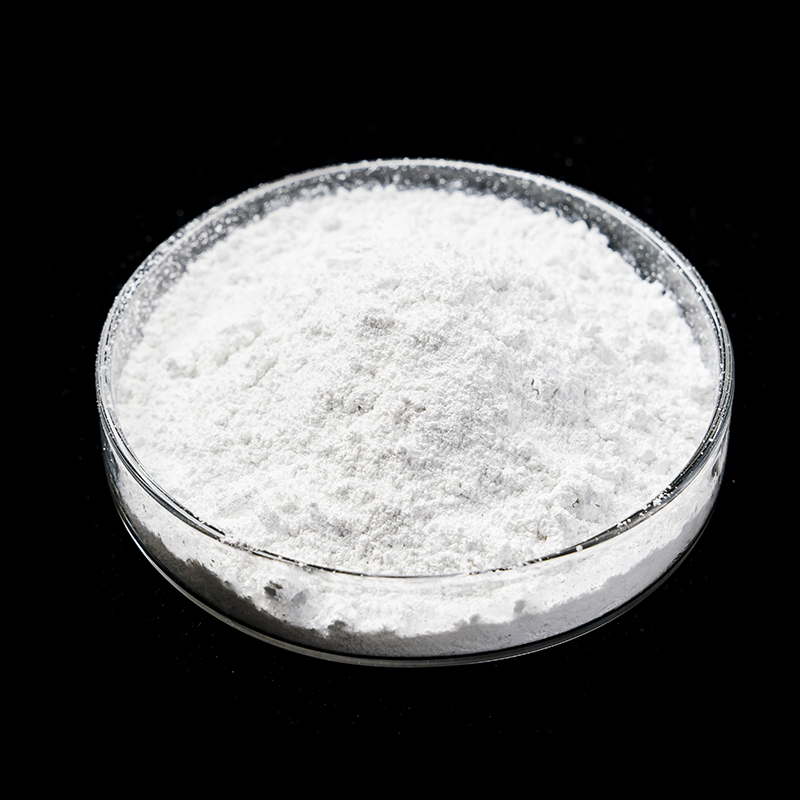 ZF-V70 Antimony Trioxide Replacement for PVC Flame RetardancyComposite flame-retardant synergist for PVC systems, designed to replace antimony trioxide while maintaining flame retardancy, processing, and physical properties.View Product →
2. Condensed-phase minerals: aluminium hydroxide and magnesium hydroxide
Aluminium hydroxide (ATH) and magnesium hydroxide (MDH) work physically rather than chemically. They decompose endothermically, release water vapour, cool the polymer surface, and dilute the flammable gases above it. The trade-off is loading: to push a filled urethane into a self-extinguishing range you may need 40 to 65 percent by weight, which is why particle size, surface treatment, and dispersion quality matter as much as the grade name on the bag. Ultrafine, high-purity grades let you reach the same fire performance with less mechanical damage, and they form the backbone of most halogen-free urethane systems. If you are weighing mineral fillers against other options, our overview of custom single-substance flame retardants is a useful starting point.
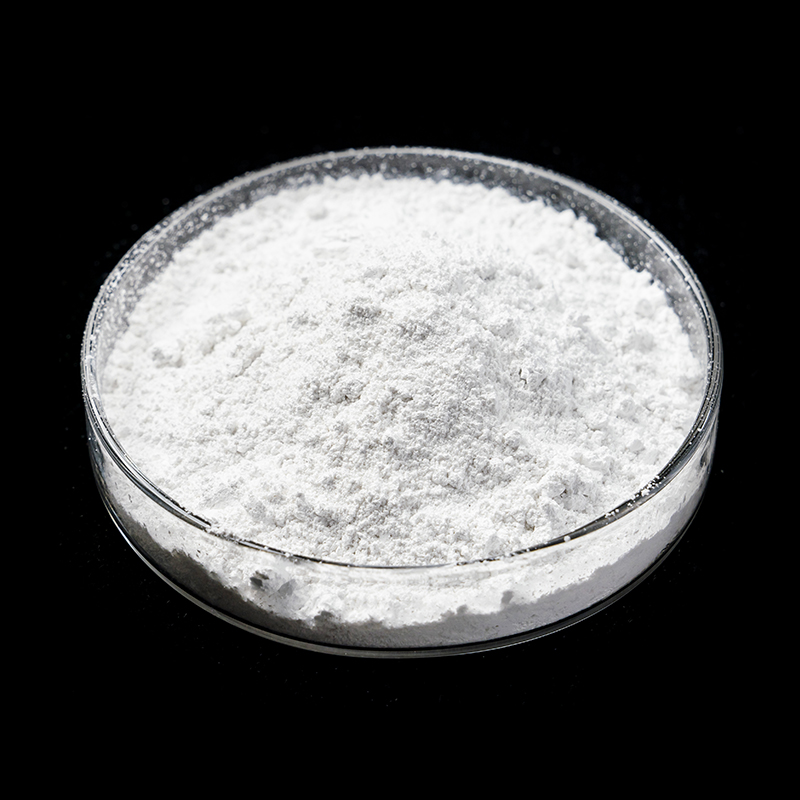 ZF-21 Ultra-Fine High-Purity Synthetic Magnesium Hydroxide Flame RetardantUltrafine synthetic magnesium hydroxide for halogen-free polymers, with high purity and multiple surface-treatment grades for cable and elastomer systems.View Product →
3. Phosphorus, char formers, and intumescent packages
Phosphorus-based additives act mainly in the condensed phase. They promote char formation and cross-linking at the surface, creating an insulating layer that slows pyrolysis. They are particularly effective in rigid foams, coatings, and thin sections, where a mineral filler at 50 percent would destroy the physical properties. Char quality can be improved further with small additions of silicate-type charring agents such as montmorillonite, sepiolite, or attapulgite, which reinforce the char skeleton and reduce dripping. In coatings and sealants, an intumescent package combining an acid source, a carbon source, and a blowing agent is often the most economical route.
Matching the Additive to the Urethane Form
The matrix decides the additive far more than the other way around. The table below summarises how the main urethane forms are usually protected, and what each route costs you in properties.
| Urethane form | Typical approach | Typical loading | Main trade-off |
|---|---|---|---|
| Flexible PU foam | Halogenated or phosphorus-based systems, melamine | 8-20 phr | Filler stiffens the foam and raises compression set |
| Rigid PU and PIR foam | Phosphorus polyols, reactive FRs, ATH or MDH | 30-60 phr for minerals | Viscosity rises and cell structure can shift |
| Coatings, adhesives, sealants | Liquid phosphorus, fine halogen-free composites | 5-15 percent | Film hardness, adhesion, and clarity |
| TPU and cast elastomers | Halogen-free ATH or MDH, sometimes with phosphorus | 20-50 percent | Tensile strength and elongation fall as loading climbs |
| Wire and cable jackets | Halogen-free mineral systems, synergist in halogen systems | 25-55 percent | Surface finish, flexibility, cold-bend performance |
Two notes sit behind that table. First, loading is a working range, not a specification; your target rating and section thickness decide the real number. Second, temperature windows are not negotiable. ATH starts to decompose near 200 degrees Celsius, while MDH is stable to roughly 300 degrees Celsius, which strongly influences which mineral you can use in a TPU that is processed hot or in a foam that exotherms during curing.
Dosage, Testing, and the Mechanical Price
Every flame retardant is a compromise, and the honest way to manage it is to decide early which property you are willing to trade. Mineral fillers cost tensile strength and elongation. Halogen systems cost smoke performance and, in some markets, acceptance. Phosphorus systems can plasticise a matrix, softening the finished part.
Practical targets help. An LOI above 26 usually indicates self-extinguishing behaviour in air. A UL 94 V-0 rating at 1.5 mm demands both a sound formulation and a well-dispersed filler. Cone calorimeter data shows how the material behaves in a real fire rather than in a small flame. If you can only run one test before committing to a trial, run the one your customer runs.
Smoke deserves its own line. In tunnels, rail cars, and buildings, smoke density and toxicity often matter more than the burn rating itself, and mineral fillers have a natural advantage there because they dilute the fuel load instead of vaporising into the flame zone.
Processing Notes That Save Reformulation Time
A formulation that passes in the lab and fails on the line is usually a processing problem, not a chemistry problem. A few habits pay off:
- Dry mineral fillers before use. Surface moisture on ATH or MDH causes voids in foam and silver streaks in extruded TPU.
- Feed fillers downstream where possible. High loadings in the throat can starve the screw.
- Watch viscosity in liquid systems. A 50 percent mineral load can turn a pourable polyol blend into a paste, which changes metering and mixing behaviour.
- Consider surface treatment. Silane or stearate coatings reduce agglomeration and improve the bond between filler and polymer.
- Check the exotherm. In foams, filler loading changes the reaction profile, and a slower cream time can ruin cell structure before the flame retardant ever matters.
Urethane Elastomers, Coatings, and Cable Jackets
Thermoplastic polyurethane is one of the friendlier matrices for halogen-free flame retardancy, because it processes at temperatures where ATH is stable and it accepts high filler loadings without losing too much flexibility. That is why TPU cable harness components and similar wire and cable parts are among the most common halogen-free urethane applications. In these parts, ultrafine ATH with a tight particle size distribution is often the workhorse, sometimes combined with a phosphorus additive to reach the required rating at a lower total load.
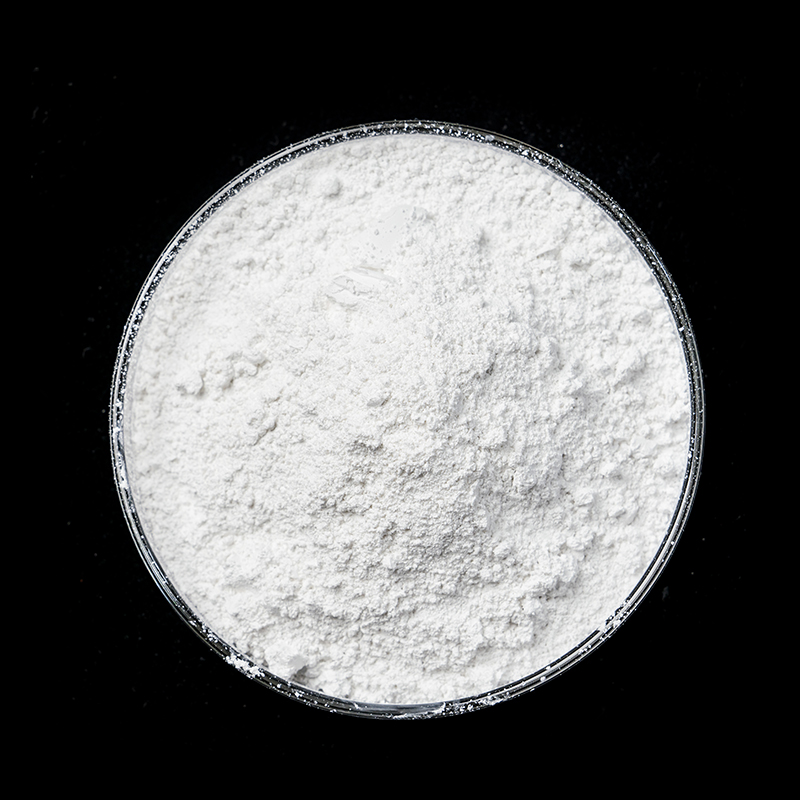 ZF-102 Ultra-Fine Electrical-Grade Flame-Retardant Aluminium HydroxideUltrafine aluminium hydroxide for halogen-free wire and cable insulation, epoxy laminates, and systems requiring electrical performance and low-temperature flexibility.View Product →
Coatings, inks, and pressure-sensitive adhesives sit at the other end of the scale. They need low loadings, good clarity, and no interference with cure or adhesion, so liquid phosphorus compounds and fine composite powders usually beat mineral fillers. Elastomer and adhesive-film products follow the same logic: the flame retardant has to be nearly invisible in the finished part.
Where a Specialist Supplier Earns Their Keep
Flame retardant selection is one of those problems where a small piece of experience saves weeks of trial work. Our team at Jiangsu Zhuofeng has been supplying flame retardant additives since 2020, with production lines built around high-purity, ultrafine mineral grades and an application testing laboratory for flame retardant polymer materials. In practice, that means we can usually tell you before you order a drum whether a mineral route will meet your rating, what loading it will take, and how it will affect your tensile data. We also produce composite and masterbatch forms, which is often the simplest way to introduce a heavy filler loading without changing your existing feeding setup.
The Short Version
- Urethane is flammable, but it responds well to well-chosen additives.
- Halogen systems are efficient but need a synergist; mineral systems are halogen-free but need high loadings and good dispersion.
- The urethane form decides the route: foam, rigid board, coating, elastomer, and cable jacket all behave differently.
- Check the processing temperature before choosing between ATH and MDH.
- Test what your customer tests, and budget for a mechanical trade-off from the beginning.
PREV:Most Productive Plasma Cutting Line for Stiffener Profiles in Shipbuilding
NEXT:Antimony Oxide Explained: Properties, Uses and Safer Flame Retardant Alternatives
NEXT:Antimony Oxide Explained: Properties, Uses and Safer Flame Retardant Alternatives
Interested in cooperation or have questions?
Featured Products

Let'S Work Together Welcome Aboard!
-
Oversea Sales: mayuqin@zhuofengfr.com
Company email: rikkima@zhuofengfr.com
-
WhatsApp: +86 18105180388
-
Address: No. 5, Wutai Road, Dongba Street, Gaochun District, Nanjing City, Jiangsu Province, China
Join Our Mailing List
Product Categories
Quick Links
Quick Links
Copyright © Jiangsu Zhuofeng New Materials Technology Co., Ltd.
All Rights Reserved.
 Environmentally Friendly Flame Retardants Manufacturers