
 English
 Tiếng Việt

Fire-Fighting Equipment
Fire-Fighting Equipment
Fire-Fighting Equipment
Fire-Fighting Equipment
Fire-Fighting Equipment
Fire-Fighting Equipment
Fire-Fighting Equipment
Fire-Fighting Equipment
Fire-Fighting Equipment
Fire-Fighting Equipment
Fire-Fighting Equipment
Fire-Fighting Equipment
Fire-Fighting Equipment
Fire-Fighting Equipment
Fire-Fighting Equipment
Fire-Fighting Equipment

Fire-Fighting Equipment


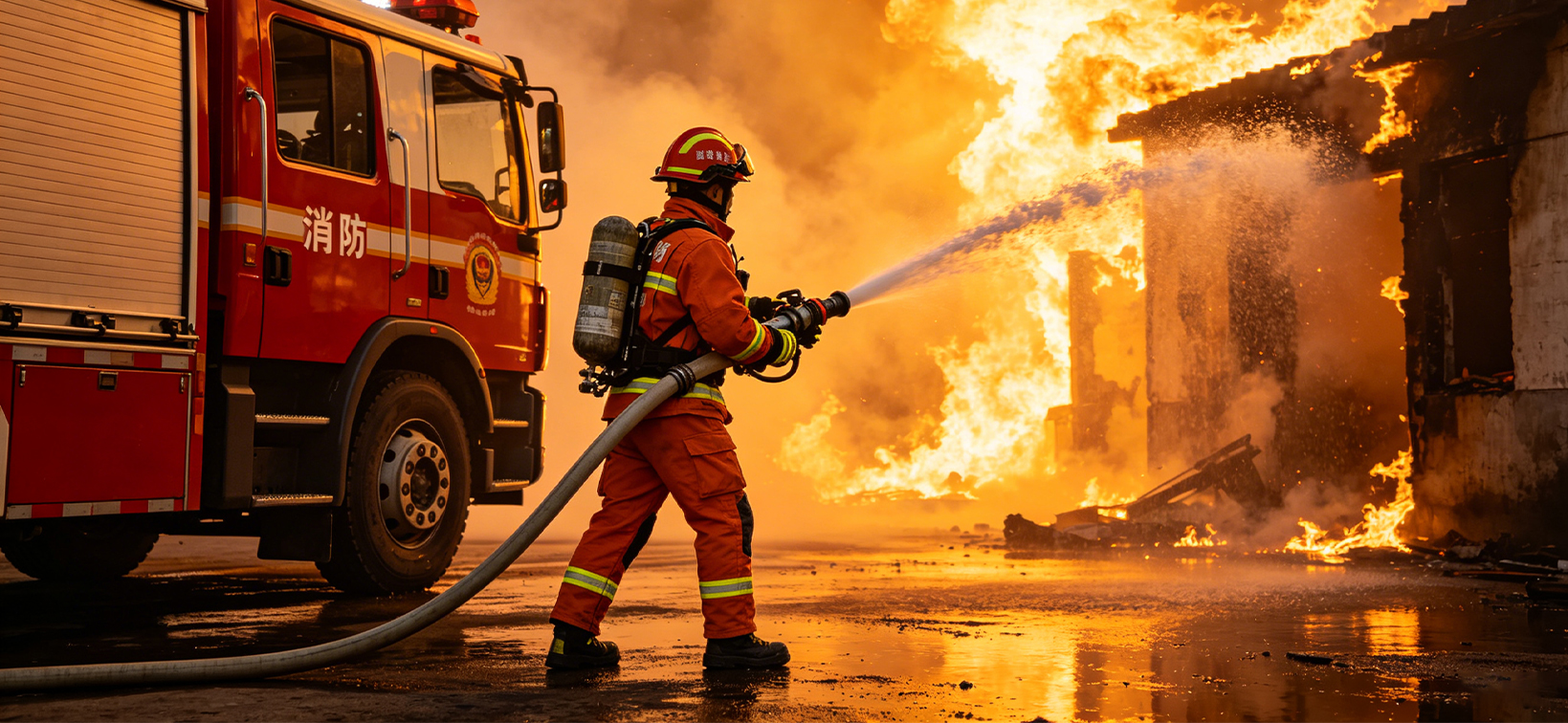
Tailored specifically for key areas such as fire escape equipment, fireproof coatings, flame-retardant cables, fireproof panels, and interior decoration of public vehicles. Relying on high-purity, ultra-fine production processes and a testing laboratory for flame-retardant polymer materials, Zhuofeng Technology ensures that its products can quickly form a dense carbon layer at high temperatures, effectively suppressing the generation of smoke and the release of toxic gases, while avoiding the secondary harm to rescue personnel and the environment caused by traditional halogen flame retardants.
Recommended Products

Industry Knowledge
Why Fire Escape Equipment Requires a Different Flame Retardant Formulation Approach Than General Industrial Parts
Fire escape equipment, including emergency descent devices, escape ladders, evacuation slides, and related structural components, operates under a fundamentally different risk profile than typical industrial or consumer plastic parts, since these products are specifically intended to remain functional during the exact fire event that would compromise ordinary materials. This changes the formulation priority hierarchy: mechanical integrity retention at elevated temperature and extended flame exposure duration often matter as much as the initial UL94 or equivalent rating, since a component that passes a short burn test but loses structural strength after sustained heat exposure could fail during an actual evacuation scenario lasting several minutes.
Performance priorities specific to fire escape applications
- Mechanical property retention after extended, not just brief, exposure to elevated temperature or open flame
- Char layer stability under mechanical load, since escape equipment often bears body weight or structural stress during the exact conditions flame retardancy is meant to address
- Smoke density and toxicity performance, given that escape equipment is used in close proximity to people during active evacuation
- Consistent flame performance across the full range of ambient conditions the equipment might be stored or deployed in, including extended outdoor exposure for permanently installed systems
Manufacturers developing new fire escape products should request extended-duration burn and load-bearing data from their flame retardant supplier, rather than relying solely on standard short-duration UL94 classification, since the latter alone does not capture how the material behaves under the sustained real-world conditions these products are designed for.
Char-Forming Agent Selection for Structural Integrity Under Sustained Flame Exposure
The char layer formed by an intumescent flame retardant system serves a dual function in fire escape equipment: insulating the underlying material from further heat while also, in many applications, needing to retain some structural cohesion rather than crumbling under load. Standard char-forming agent selection optimized purely for insulation performance may not adequately address this secondary structural requirement, which is why formulation work for load-bearing escape equipment components often needs additional testing beyond typical char yield and afterflame time measurements used for general flame retardant qualification.
Char performance characteristics relevant to load-bearing applications
| Char Characteristic | Relevance to Escape Equipment |
| Char density and continuity | Determines insulating effectiveness over extended exposure |
| Char mechanical rigidity | Affects whether structural load-bearing capacity is retained |
| Char adhesion to substrate | Prevents char layer from separating under mechanical stress |
Testing char performance under simulated mechanical load applied during or immediately after flame exposure, rather than evaluating char formation in isolation from any structural stress, gives a more representative picture of how a formulation will perform in an actual load-bearing escape component.
Balancing Flame Retardant Loading With Weight and Portability in Handheld Fire Escape Devices
Handheld or wearable fire escape equipment, such as emergency descent devices or personal evacuation harness components, faces a formulation constraint less common in fixed installations: total product weight directly affects usability, since a device that is too heavy may be difficult for an individual to deploy quickly under stress or may not meet portability requirements for the intended use case. This creates tension with flame retardant systems that rely on high mineral filler loading to achieve their fire rating, since weight-conscious applications generally favor lower-loading, higher-efficiency flame retardant chemistry even at a higher material cost per unit.
Formulation approaches for weight-sensitive escape equipment
- Prioritizing lower-loading intumescent or phosphorus-based systems over high-loading mineral hydroxide fillers where weight is a primary constraint
- Using synergist combinations to reduce total flame retardant loading needed to reach the target fire rating without compromising performance
- Evaluating whether component geometry can be adjusted to concentrate flame retardant material only in critical structural sections rather than uniformly throughout the part
- Weighing the tradeoff between higher-cost, lower-loading chemistry against the practical usability benefit of a lighter finished product
Manufacturers should specify both the target flame rating and the maximum acceptable component weight upfront when consulting a flame retardant supplier, since these two constraints together, rather than fire rating alone, determine which chemistry options are practically viable for a given handheld design.
Composite Panel Construction Considerations for Fireproof Building Panels
Fireproof composite panels used in construction applications typically combine multiple material layers, such as a core insulation layer sandwiched between facing skins, and flame retardant formulation needs to be evaluated at the assembly level rather than for each layer in isolation, since fire behavior at the interface between dissimilar materials can differ significantly from how each material performs independently. A core material and facing skin that each pass flammability testing separately do not automatically guarantee the assembled panel will meet the same rating, particularly regarding flame spread along the bond line or delamination behavior under sustained heat exposure.
Assembly-level factors affecting composite panel fire performance
- Bond line integrity under sustained heat exposure, since adhesive degradation can allow delamination that exposes the core material prematurely
- Flame spread behavior specifically at the interface between core and facing materials, which may differ from flame spread through either material alone
- Smoke generation from the combined assembly under building code testing protocols, which typically evaluate the full panel rather than individual components
- Structural performance retention of the assembled panel during and after fire exposure, relevant for panels serving a load-bearing or fire-separation function in building design
Building product manufacturers should request assembly-level fire test data on the actual panel construction being specified, including the specific adhesive and facing material combination, rather than relying on individual component certifications to infer overall panel performance.
Composite Flame Retardant Systems for Multi-Layer Panel Cores
Fireproof panel cores often benefit from composite flame retardant systems that combine multiple additive types rather than relying on a single flame retardant chemistry, since building fire codes typically require performance across several test dimensions simultaneously, including flame spread, smoke development, and sometimes structural integrity retention, that no single additive class optimizes equally well. A composite approach might combine a mineral hydroxide base for cost-effective bulk flame suppression with a smaller addition of an intumescent or char-promoting component to improve structural char retention specifically at panel edges or cut surfaces where the core material is directly exposed.
Considerations when formulating composite systems for panel cores
- Balancing cost-effective bulk flame retardancy against the incremental performance benefit of a secondary additive addressing a specific weak point such as edge exposure
- Confirming compatibility between the multiple flame retardant components and the core material's own chemistry, whether polyurethane foam, mineral wool binder, or another core system
- Testing the composite system against the specific building code standard applicable to the target market, since requirements vary meaningfully between regions and building use classifications
- Evaluating long-term stability of the composite additive system under the panel's expected building service life, often measured in decades rather than years
Working with a supplier that has experience formulating composite flame retardant systems specifically for panel core applications helps avoid a trial-and-error approach to balancing multiple additive components, since the interactions between different flame retardant chemistries in a shared matrix are not always predictable from single-additive datasheets alone.
Regulatory Testing Pathways for Fire Escape Equipment and Fireproof Building Panels
Fire escape equipment and fireproof building panels are both subject to regulatory testing frameworks that are generally more rigorous and application-specific than general-purpose flammability standards like UL94, reflecting the life-safety role these products play. Building panel manufacturers typically need to navigate regional building code testing standards that evaluate flame spread, smoke development, and sometimes structural fire resistance rating in hours, while fire escape equipment manufacturers often face product-specific certification requirements tied to the equipment type and intended deployment scenario rather than a single universal flammability standard.
Planning considerations for regulatory testing pathways
- Identifying the specific regulatory standard and testing body applicable to the target market early in formulation development, since requirements differ significantly by region and product category
- Building adequate lead time into the development schedule for third-party certification testing, which is typically more time-intensive than standard flame retardant qualification testing
- Confirming whether the applicable standard requires assembly-level or full-product testing rather than raw material or component-level certification alone
- Maintaining documentation of flame retardant formulation consistency across production, since regulatory certifications for life-safety products often require ongoing compliance verification rather than a one-time approval
Engaging a flame retardant supplier with an in-house application testing laboratory early in the development process allows preliminary formulation screening to happen before committing to the more time-intensive and costly third-party regulatory certification process required for life-safety products like fire escape equipment and fireproof building panels.
Let'S Work Together Welcome Aboard!
-
Oversea Sales: mayuqin@zhuofengfr.com
Company email: rikkima@zhuofengfr.com
-
WhatsApp: +86 18105180388
-
Address: No. 5, Wutai Road, Dongba Street, Gaochun District, Nanjing City, Jiangsu Province, China
Join Our Mailing List
Product Categories
Quick Links
Quick Links
Copyright © Jiangsu Zhuofeng New Materials Technology Co., Ltd.
All Rights Reserved.
 Fireproof Panels Composite Flame Retardant Manufacturers
Fireproof Panels Composite Flame Retardant Manufacturers