
 English
 Tiếng Việt

Industrial Fire Retardants Suppliers: How to Choose the Right Partner for You
Industrial Fire Retardants Suppliers: How to Choose the Right Partner for You
Industrial Fire Retardants Suppliers: How to Choose the Right Partner for You
Industrial Fire Retardants Suppliers: How to Choose the Right Partner for You
Industrial Fire Retardants Suppliers: How to Choose the Right Partner for You
Industrial Fire Retardants Suppliers: How to Choose the Right Partner for You
Industrial Fire Retardants Suppliers: How to Choose the Right Partner for You
Industrial Fire Retardants Suppliers: How to Choose the Right Partner for You
Industrial Fire Retardants Suppliers: How to Choose the Right Partner for You
Industrial Fire Retardants Suppliers: How to Choose the Right Partner for You
Industrial Fire Retardants Suppliers: How to Choose the Right Partner for You
Industrial Fire Retardants Suppliers: How to Choose the Right Partner for You
Industrial Fire Retardants Suppliers: How to Choose the Right Partner for You
Industrial Fire Retardants Suppliers: How to Choose the Right Partner for You
Industrial Fire Retardants Suppliers: How to Choose the Right Partner for You
Industrial Fire Retardants Suppliers: How to Choose the Right Partner for You

Industry News
Home / News / Industry News / Industrial Fire Retardants Suppliers: How to Choose the Right Partner for You
Product Category
NEW Category
Industrial Fire Retardants Suppliers: How to Choose the Right Partner for You
Content
- 1 What Industrial Fire Retardants Suppliers Actually Deliver
- 2 Matching Flame Retardant Chemistry to Your Substrate
- 3 Application-Specific Grades and Where They Fit
- 4 Evaluation Criteria That Actually Predict Performance
- 5 Common Procurement Risks—and How to Avoid Them
- 6 Questions to Ask Before Placing a Volume Order
When a polypropylene compound fails a UL 94 V-0 test by two seconds, the fix is rarely a simple grade swap. More often it comes down to the flame retardant itself—its purity, particle size distribution, and how well the supplier understands your processing window. That is why choosing among industrial fire retardants suppliers is less about price per kilogram and more about three things: product chemistry that fits your polymer, batch-to-batch consistency, and application support that shortens your testing loop. Suppliers who cover all three turn certification into a routine step; suppliers who miss one turn it into months of rework and scrapped lots.
What Industrial Fire Retardants Suppliers Actually Deliver
A capable supplier's catalogue shows you how they think, and it generally falls into four groups:
- Single-substance flame retardants: mineral-based powders such as aluminium hydroxide, synthetic magnesium hydroxide, brucite-derived magnesium hydroxide, and hydromagnesite.
- Composite flame retardants: blended or synergized formulations tuned for specific substrates such as PP, PA, pressure-sensitive adhesives, or printing inks.
- Flame retardant masterbatches: carrier-resin pellets, such as magnesium hydroxide or red phosphorus masterbatch, that meter cleanly into extrusion lines.
- Matching elastomer materials: TPE grades for overmolding onto PP, nylon, or polar plastics, where flame retardancy and bonding behavior must be balanced together.
A supplier who only ships powder leaves you to solve dispersion, loading, and char formation on your own. One who offers masterbatch forms, application-specific composites, and technical support shortens the distance between a datasheet and a passing burn test. The single-substance flame retardant route, for instance, works best when the supplier can adjust purity and fineness to your substrate instead of selling one generic grade to everyone.
Matching Flame Retardant Chemistry to Your Substrate
Halogen-free mineral flame retardants work by releasing bound water when heated, which cools the polymer and dilutes combustible gases. Aluminium hydroxide dehydrates around 200°C, which suits PVC and EVA but rules out resins processed above that temperature. Magnesium hydroxide holds its water until roughly 330°C, which is why it dominates halogen-free PP, PE, and PA formulations. Both families typically require high loadings—often 40 to 60 weight percent—to reach V-0, so particle size, surface treatment, and moisture control directly affect impact strength and melt flow.
For processors running tight thermal windows, an ultrafine synthetic grade such as ultrafine high-purity synthetic magnesium hydroxide preserves mechanical properties at high loading far better than coarse powders do. Where unit cost is the constraint and the polymer tolerates it, a mineral-derived option like cost-effective halogen-free brucite magnesium hydroxide delivers the same active chemistry at a lower price point—the trade-off is that natural ores deserve tighter incoming inspection on whiteness and impurity levels than fully synthetic products.
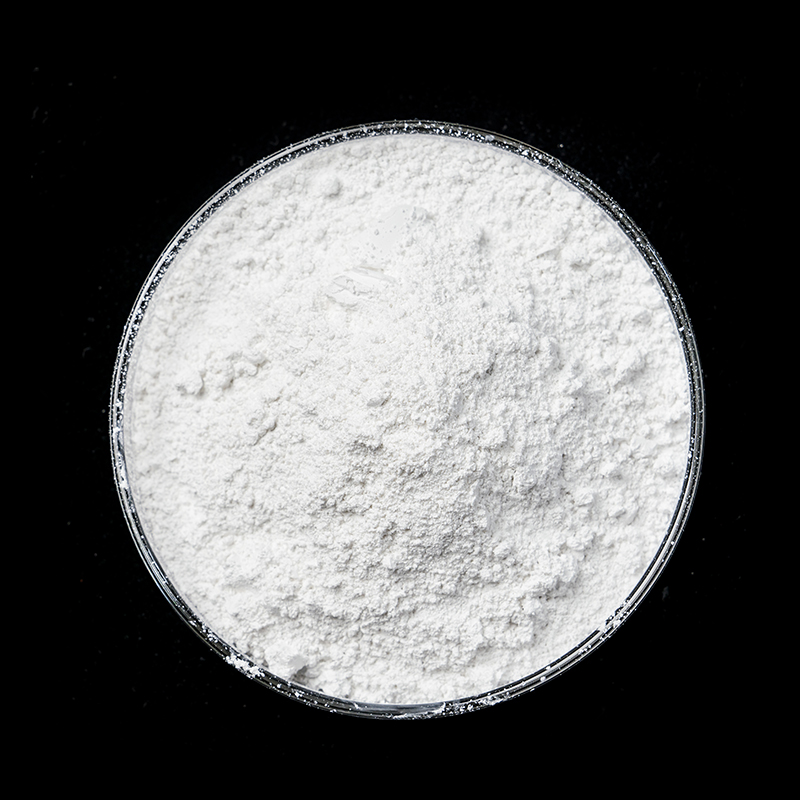 Cost-Effective Halogen-Free Brucite Magnesium Hydroxide ZF-73Sourced from natural brucite, ZF-73 delivers the same halogen-free flame retardancy and smoke suppression at a lower unit cost, ideal when cost matters and incoming whiteness and impurity inspection can be tightened.View Product →
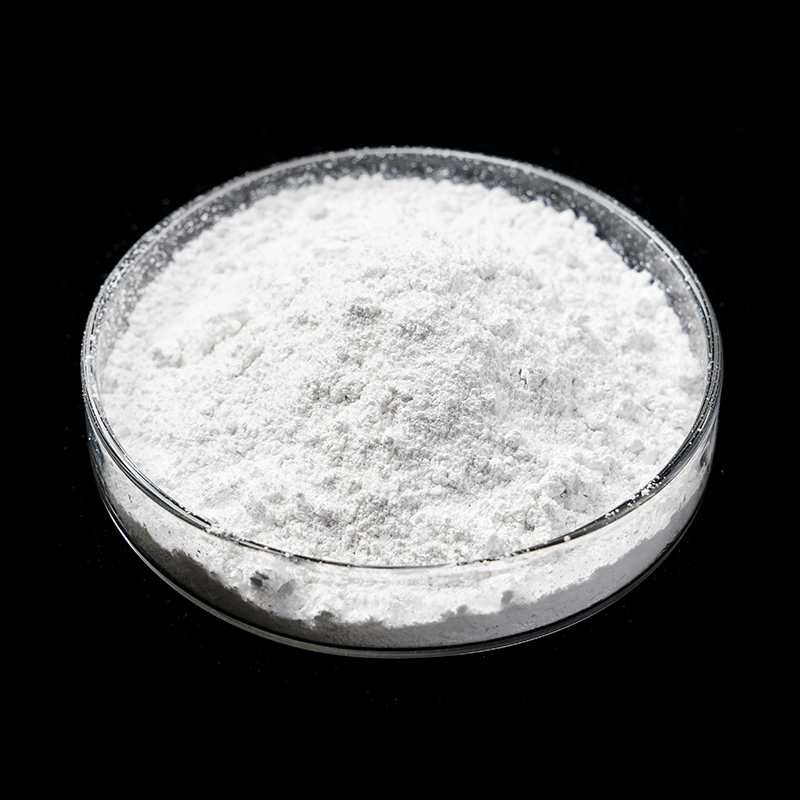 Ultra-Fine High-Purity Synthetic Magnesium Hydroxide ZF-21This ultrafine synthetic grade (d50 1.0 μm, ≥99% purity) disperses uniformly and preserves mechanical strength at high loadings, making it well suited to processors with tight thermal windows and color-sensitive compounds.View Product →
Beyond Minerals: Composites and Synergists
Not every application suits a single mineral. Thin films, inks, and adhesives cannot absorb 60% loading without failing mechanically, so composite formulations combine phosphorus-nitrogen systems, charring agents, and synergists at far lower doses. Antimony trioxide replacement products matter here as well: antimony pricing volatility has pushed many buyers toward composite synergists that reduce or eliminate ATO content while holding flame performance, particularly in PVC film calendering and conveyor belt rubber.
Application-Specific Grades and Where They Fit
Generic grades force you to reformulate from scratch; application-specific products remove most of that work:
- Inks and coatings need high whiteness, water-boiling resistance, and compatibility with resin systems at low addition levels.
- Pressure-sensitive adhesives demand retardants that do not destroy tack or peel strength.
- Polyamide processing at high temperatures requires magnesium hydroxide rather than aluminium hydroxide.
- Polypropylene compounds need systems that balance LOI improvement against impact strength.
As a concrete example, gravure and flexographic ink systems call for a grade such as water-boiling-resistant halogen-free flame retardant for ink, which is formulated for dispersion in ink resins and saves the fineness-of-grind trials that a generic mineral powder would put you through.
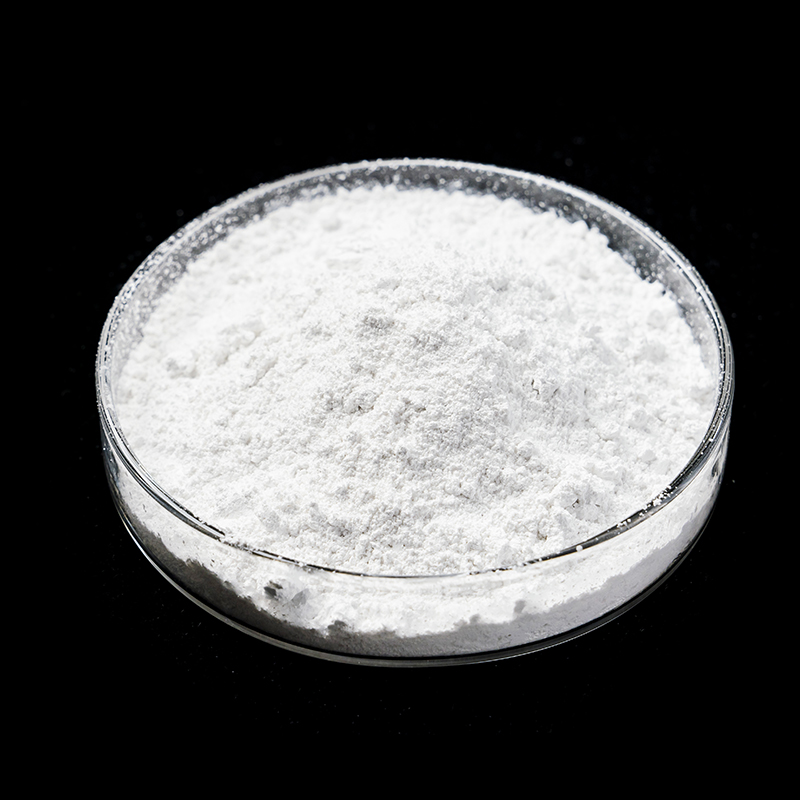 Halogen-Free P-N Water-Boiling-Resistant Flame Retardant for Ink ZF-YM-10For gravure and flexographic ink systems, this phosphorus-nitrogen retardant disperses readily in ink resins, resists boiling water, forms dense char, and meets RoHS and REACH requirements.View Product →
Evaluation Criteria That Actually Predict Performance
Datasheets differ in which numbers they volunteer, so ask for specifics on every line:
| Parameter | What to ask for | Why it matters |
|---|---|---|
| Purity / active content | Mg(OH)2 or Al(OH)3 assay plus Fe, Ca, and Cl limits | Impurities discolor compounds and destabilize formulations |
| Particle size | D50 and top-cut, not just an average figure | Coarse tails create weak points and rough surfaces |
| Moisture | A numeric specification and its test method | Water causes surface defects and processing instability |
| Whiteness | A measured value on the exact grade quoted | Critical for films, inks, and light-colored parts |
| Application data | LOI and UL 94 results on your substrate | Data on PP or PA beats generic figures every time |
Suppliers with an in-house application laboratory can produce the last row on request, usually within days. That single capability separates vendors who sell powder from partners who solve problems, and it is the fastest screen you can run during qualification: ask for a trial report on your actual resin before committing to volume pricing.
Common Procurement Risks—and How to Avoid Them
Most flame retardant sourcing failures follow predictable patterns:
- Chasing price alone. A 5% saving on powder vanishes the first time an off-spec lot interrupts a production run or a burn test fails at final inspection.
- Skipping pilot trials. Loading levels that work in lab kneaders often shift in twin-screw extruders, so always validate at production scale or close to it.
- Ignoring moisture logistics. Mineral retardants absorb water in storage; packaging, shelf life, and warehouse humidity belong in the specification, not in an afterthought.
- Single-source concentration. Qualify at least one alternate grade or supplier before volumes ramp, especially for synergist systems exposed to raw material volatility.
Every one of these risks is manageable with a supplier who documents processes and communicates openly about lot variation—which is exactly what standardization claims should be verified against during a supplier audit.
Questions to Ask Before Placing a Volume Order
Five questions expose most capability gaps in a first conversation:
- Can you share UL 94 or LOI data on my specific polymer at my target loading?
- What does your batch record for D50, purity, and moisture look like over the past twelve months?
- Do you support formulation adjustments, or only catalog grades?
- What packaging, shelf life, and moisture protection do you ship as standard?
- What is your technical support response time when a trial underperforms?
Suppliers with an application lab and a multi-functional technical team tend to answer these with documents rather than promises. If you are engineering halogen-free parts for engineering plastics, that distinction decides whether development takes weeks or quarters.
The industrial fire retardant market spans everything from global chemical majors to specialized mineral processors, and either type can be an excellent partner depending on your volume, substrate, and support needs. What matters is not the size of the supplier but the fit: chemistry matched to your polymer, specifications you can verify lot by lot, and application engineers who engage with your testing. Screen for those three, run a pilot before you commit, and flame retardant sourcing stops being a gamble and becomes a process you control.
PREV:A Practical Flame Retardant Formulation Course: Key Lessons for Industrial Buyers
NEXT:How One Compound Can Keep Products Fire-Safe | Single Substance Flame Retardants
NEXT:How One Compound Can Keep Products Fire-Safe | Single Substance Flame Retardants
Interested in cooperation or have questions?
Featured Products

Let'S Work Together Welcome Aboard!
-
Oversea Sales: mayuqin@zhuofengfr.com
Company email: rikkima@zhuofengfr.com
-
WhatsApp: +86 18105180388
-
Address: No. 5, Wutai Road, Dongba Street, Gaochun District, Nanjing City, Jiangsu Province, China
Join Our Mailing List
Product Categories
Quick Links
Quick Links
Copyright © Jiangsu Zhuofeng New Materials Technology Co., Ltd.
All Rights Reserved.
 Environmentally Friendly Flame Retardants Manufacturers
Environmentally Friendly Flame Retardants Manufacturers