
 English
 Tiếng Việt

Bulk Wholesale Brucite Powder: How to Choose Grades and Suppliers
Bulk Wholesale Brucite Powder: How to Choose Grades and Suppliers
Bulk Wholesale Brucite Powder: How to Choose Grades and Suppliers
Bulk Wholesale Brucite Powder: How to Choose Grades and Suppliers
Bulk Wholesale Brucite Powder: How to Choose Grades and Suppliers
Bulk Wholesale Brucite Powder: How to Choose Grades and Suppliers
Bulk Wholesale Brucite Powder: How to Choose Grades and Suppliers
Bulk Wholesale Brucite Powder: How to Choose Grades and Suppliers
Bulk Wholesale Brucite Powder: How to Choose Grades and Suppliers
Bulk Wholesale Brucite Powder: How to Choose Grades and Suppliers
Bulk Wholesale Brucite Powder: How to Choose Grades and Suppliers
Bulk Wholesale Brucite Powder: How to Choose Grades and Suppliers
Bulk Wholesale Brucite Powder: How to Choose Grades and Suppliers
Bulk Wholesale Brucite Powder: How to Choose Grades and Suppliers
Bulk Wholesale Brucite Powder: How to Choose Grades and Suppliers
Bulk Wholesale Brucite Powder: How to Choose Grades and Suppliers

Industry News
Product Category
NEW Category
Bulk Wholesale Brucite Powder: How to Choose Grades and Suppliers
Content
- 1 What Is Brucite Powder and Why Does It Matter for Industry?
- 2 Key Applications of Brucite Powder in Bulk Industrial Use
- 3 Brucite Powder vs. Synthetic Magnesium Hydroxide: Which Should You Source?
- 4 Critical Quality Parameters to Verify Before a Bulk Order
- 5 Bulk Pricing Factors: What Actually Determines the Wholesale Price?
- 6 How to Evaluate a Brucite Powder Supplier for Bulk Orders
- 7 Questions to Prepare Before Contacting a Supplier
- 8 Conclusion: Your Next Step in Sourcing Brucite Powder
You are responsible for sourcing flame-retardant fillers for your production line, and the conversation has shifted from "whether" to "from whom." Bulk wholesale brucite powder offers a cost-effective path to flame retardancy, but only if you know exactly what to specify, what to test, and what to ask before you commit to a container-load order. This guide is written for procurement managers and R&D engineers who need a practical framework for evaluating suppliers, verifying quality, and negotiating terms—not a chemistry textbook recap. We will walk through the mineral's identity, its key applications, how it compares to synthetic alternatives, the quality parameters that actually matter, and the questions you should put to any supplier before signing a purchase agreement.
What Is Brucite Powder and Why Does It Matter for Industry?
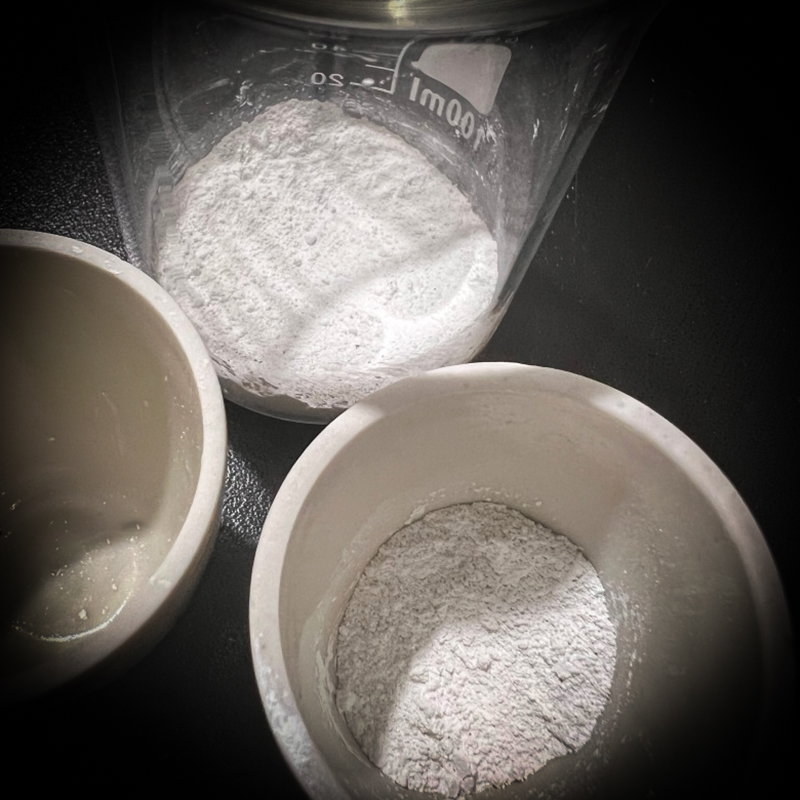
Brucite powder is the milled, classified form of the natural mineral brucite, which is chemically magnesium hydroxide (Mg(OH)₂). Unlike synthetic magnesium hydroxide, which is precipitated from seawater or brine in an industrial process, brucite is mined directly from the earth. This distinction is not academic—it drives real differences in cost structure, crystallinity, and consistency that you will encounter when comparing wholesale suppliers.
For industrial buyers, the importance of brucite powder lies in its dual role. It functions primarily as a flame-retardant filler, but it also serves as a value-added functional filler in applications such as fertilizer anti-caking agents. When compounded into polymers, brucite decomposes endothermically at elevated temperatures, absorbing heat and releasing water vapor. In practical terms, this slows ignition and reduces smoke generation—a critical advantage in cable, construction, and transportation applications. With a typical bulk density range reported in technical documentation between 350 and 1,000 g/l, the powder's physical form is a key specification to lock down during sourcing discussions.
Key Applications of Brucite Powder in Bulk Industrial Use
The right grade of brucite powder depends almost entirely on your application. A grade that performs well as a fertilizer additive may be entirely unsuitable for thin-wall cable insulation. Below are the primary bulk-use segments and the characteristics each typically demands.
Flame-Retardant Plastics and Rubber
This is the largest and most technically demanding market for brucite powder. In polyolefins (PP, PE) and rubber compounds, brucite acts as a halogen-free flame retardant. The key advantages over aluminum hydroxide (ATH) are a higher decomposition temperature and better smoke suppression. This means compounds can often be processed at higher temperatures without premature decomposition of the filler. For this segment, you will typically specify a fine particle size (D50 in the low single-digit micron range) and a surface treatment, usually stearic acid coating, to improve dispersion and mechanical properties.
Cable Compounds
Cable manufacturers use brucite powder extensively to meet stringent fire safety standards. The requirement here is pronounced: consistency. A batch-to-batch variation in particle size distribution can alter the compound's rheology, leading to extrusion problems or out-of-spec mechanical properties. If you are in this industry, prioritize a supplier who can demonstrate tight control over D50 and D97 values on their certificates of analysis.
Construction Materials
In construction products such as wall panels and roofing sheets, brucite is used for fire resistance without the weight penalty of some other fillers. The purity requirements are generally slightly relaxed compared to cable-grade material, which makes this segment attractive for buyers focusing strictly on cost per ton. However, you should still verify the Mg(OH)₂ content to ensure the fire-retardant performance meets your local building code requirements.
Fertilizer Anti-Caking Agent
This is a practical, high-volume application confirmed in standard technical data sheets. Fine brucite powder is used as a coating agent on fertilizer prills to prevent clumping during storage. For this application, the surface chemistry and moisture content are more relevant than flame-retardant properties. A cost-effective, moderately pure grade is typically sufficient, making this a straightforward bulk procurement category.
Brucite Powder vs. Synthetic Magnesium Hydroxide: Which Should You Source?
This is the first decision you will face, and it should be based on your tolerance for variability against your target cost. Natural brucite powder and synthetic magnesium hydroxide are not interchangeable without qualification.
Natural brucite offers a clear cost advantage. Because it is mined rather than chemically synthesized, the energy input and capital cost are significantly lower. For applications that can tolerate minor variations in impurity profiles and crystallinity—such as many construction materials and fertilizer additives—natural brucite provides the lowest total cost of ownership.
Synthetic magnesium hydroxide offers superior consistency and purity. If your process requires extremely tight batch-to-batch reproducibility, or if your polymer application demands a purity level that natural mineral deposits cannot guarantee, synthetic routes may be justified. The trade-off is a price point that can be several times higher than natural grades.
We happen to supply both natural brucite powder and synthetic magnesium hydroxide grades, which gives us a somewhat unique vantage point: we do not have a financial incentive to push you toward a route that does not fit your formulation. From a practical standpoint, we recommend obtaining samples of both routes when you are qualifying a new supplier. Run your own compounding trials and flame tests. The cost of a few sample shipments is negligible compared to the risk of a failed container-load order.
Critical Quality Parameters to Verify Before a Bulk Order
Price per ton is a meaningless metric without a full quality specification. Before you issue a purchase order, ensure the supplier can confirm the following parameters in writing, and request a certificate of analysis (COA) for each lot you intend to purchase.
| Parameter | Why It Matters | Typical Sourcing Question |
|---|---|---|
| Mg(OH)₂ Content | Defines the active flame-retardant fraction; lower values mean more inert filler. | "What is the minimum guaranteed Mg(OH)₂ content?" |
| Particle Size (D50 / D97) | Affects dispersion, mechanical properties, and surface finish in polymers. | "Can you provide a full particle size distribution curve?" |
| Whiteness / Brightness | Critical for applications where the final product color is visible. | "What whiteness index (e.g., R457) do you guarantee?" |
| Surface Treatment | Untreated powder aggregates; stearic acid coating improves polymer compatibility. | "Is this grade surface-modified, and with what agent?" |
| Moisture Content | High moisture can cause voids in extruded compounds and clumping. | "What is the maximum moisture percentage at shipment?" |
| Bulk Density | Impacts logistics cost and dosing in automatic weighing systems. | "What is the typical loose bulk density range?" |
Beyond these numbers, pay close attention to batch consistency. A supplier who shows you one stellar COA but cannot maintain that quality across multiple production lots is a liability. Ask for historical COA data from the last three to five production batches. This is a standard request in professional procurement and a legitimate test of a supplier's quality management system.
Bulk Pricing Factors: What Actually Determines the Wholesale Price?
You will find significant price variation across brucite powder suppliers. This is not arbitrary; it reflects a defined set of cost drivers. Understanding them will help you evaluate whether a quote is competitive or simply too good to be true.
- Purity grade: Higher Mg(OH)₂ content requires more selective mining and additional beneficiation, which increases cost.
- Particle size: Ultra-fine grinding (D50 below 2 µm) is energy-intensive and significantly more expensive than coarser grades.
- Surface treatment: Stearic acid coating adds material and processing cost but is essential for polymer applications.
- Purchase volume: Wholesale pricing naturally tiers downward with volume. A 20-ton order will always command a different unit price than a 500-ton annual contract.
- Packaging form: Standard 25 kg woven bags are cheapest. Ton bags (bulk bags or FIBC) reduce handling costs but require appropriate unloading equipment. Custom packaging, such as moisture-proof liners, adds cost.
- Trade terms (Incoterms): EXW (Ex Works), FOB (Free on Board), and CIF (Cost, Insurance, Freight) shift responsibility for freight and insurance between buyer and seller. Always compare quotes on the same Incoterm basis, or you are comparing apples to oranges.
A practical note on pricing transparency: be wary of any supplier who quotes a price without asking about your application. A reputable supplier will want to know your polymer system, processing temperature, and target flame-retardant rating before quoting, because the right (or wrong) grade has a direct impact on their production cost. If you receive a quote within minutes of a generic email inquiry, treat it with caution. The most efficient way to get an actionable price is to provide a complete specification upfront and ask for a formal quotation on the specific Incoterm you prefer.
How to Evaluate a Brucite Powder Supplier for Bulk Orders
Choosing a supplier is a long-term decision that affects your product quality, production uptime, and liability profile. Beyond the paperwork, there are structural factors you should investigate during the evaluation process.
Raw Material Security
Brucite is a natural mineral, which means a supplier's production is only as reliable as their mine access. Ask whether the supplier owns its mining rights or has long-term offtake agreements with mines. A trading company without secured upstream supply is exposed to market shortages that they may pass on to you as delivery delays.
Processing Capability
Mined ore is not directly usable as a premium filler. The supplier must control crushing, classification, surface modification, and quality testing in-house or through tightly managed toll processors. Inquire about their production lines: do they have jet mills or other ultra-fine grinding equipment? Do they perform surface treatment in a controlled environment? A supplier with fragmented outsourcing may struggle with consistency.
Application Testing Support
This is a differentiator that is worth significant weight in your scoring matrix. A supplier who maintains an application testing laboratory can help you troubleshoot dispersion issues, optimize filler loading, and interpret flame test results. For context, our own facility includes an application testing lab for flame-retardant polymer materials, which allows us to run trials on PP and PA systems. We believe this type of capability is a strong indicator of a supplier's technical maturity and willingness to partner beyond the sale. You should ask every candidate supplier: "Do you have in-house laboratory capability to test our compounds, or do you rely solely on raw material certificates?"
Trial Order Flexibility
Very few serious buyers move from first contact to a five-container order. The right supplier will offer a sample program that allows you to qualify the material in your own laboratory settings, followed by a trial batch (typically one ton or one pallet) that runs through your production line. Be cautious of any supplier pressuring you to commit to a large volume before you have verified the material works in your process.
Questions to Prepare Before Contacting a Supplier
To save time and make your inquiry process more effective, prepare a structured list of questions to send in your first email or RFQ. The following checklist covers the essential ground for a professional sourcing inquiry.
- "Can you provide a detailed specification sheet for your standard brucite powder grades, including Mg(OH)₂ content, D50, D97, whiteness, and moisture?"
- "What is the minimum order quantity (MOQ) for a trial order, and what is the MOQ for a standard production order?"
- "Is surface treatment (e.g., stearic acid coating) available as a standard option, and how does it affect pricing?"
- "What are your standard packaging options (25 kg bags, ton bags, etc.) and what is the lead time for each?"
- "Can you provide a certificate of analysis (COA) with every shipment, and do you share historical batch data for consistency review?"
- "What trade terms do you typically quote (EXW, FOB, CIF), and which ports or airports do you ship from?"
- "What is your standard production lead time for a 20-ton FCL (full container load) order?"
- "Do you have an application testing laboratory that can evaluate our compound, or do you provide technical support during material qualification?"
- "Do you offer both natural brucite and synthetic magnesium hydroxide, and can you provide samples of both for comparative testing?"
- "What is your sample policy for out-of-spec material, and how are quality claims resolved?"
These questions will separate a professional, technically competent supplier from an intermediary who is simply re-bagging material. If a supplier cannot provide clear answers to most of these, it is a strong signal to move on.
Conclusion: Your Next Step in Sourcing Brucite Powder
Sourcing bulk wholesale brucite powder does not need to be a leap of faith. The discipline of professional procurement applies here as it does to any critical raw material: define your application requirements, verify quality parameters against a COA, understand the cost drivers behind the price, and evaluate the supplier's long-term structural capacity—not just their sales pitch. You now have the framework to execute that plan and, crucially, the specific questions to ask before your next inquiry.
The logical next step is to request samples and a COA from a shortlist of suppliers. As a supplier of both natural brucite powder and synthetic magnesium hydroxide with an in-house application testing laboratory, we can support that qualification process from either route. Contact us with your specification, and we will provide the relevant documentation and sample options for your evaluation.
PREV:How One Compound Can Keep Products Fire-Safe | Single Substance Flame Retardants
NEXT:Optimizing Fire Safety with Custom Single Substance Flame Retardants
NEXT:Optimizing Fire Safety with Custom Single Substance Flame Retardants
Interested in cooperation or have questions?
Featured Products

Let'S Work Together Welcome Aboard!
-
Oversea Sales: mayuqin@zhuofengfr.com
Company email: rikkima@zhuofengfr.com
-
WhatsApp: +86 18105180388
-
Address: No. 5, Wutai Road, Dongba Street, Gaochun District, Nanjing City, Jiangsu Province, China
Join Our Mailing List
Product Categories
Quick Links
Quick Links
Copyright © Jiangsu Zhuofeng New Materials Technology Co., Ltd.
All Rights Reserved.
 Environmentally Friendly Flame Retardants Manufacturers
Environmentally Friendly Flame Retardants Manufacturers