
 English
 Tiếng Việt

How One Compound Can Keep Products Fire-Safe | Single Substance Flame Retardants
How One Compound Can Keep Products Fire-Safe | Single Substance Flame Retardants
How One Compound Can Keep Products Fire-Safe | Single Substance Flame Retardants
How One Compound Can Keep Products Fire-Safe | Single Substance Flame Retardants
How One Compound Can Keep Products Fire-Safe | Single Substance Flame Retardants
How One Compound Can Keep Products Fire-Safe | Single Substance Flame Retardants
How One Compound Can Keep Products Fire-Safe | Single Substance Flame Retardants
How One Compound Can Keep Products Fire-Safe | Single Substance Flame Retardants
How One Compound Can Keep Products Fire-Safe | Single Substance Flame Retardants
How One Compound Can Keep Products Fire-Safe | Single Substance Flame Retardants
How One Compound Can Keep Products Fire-Safe | Single Substance Flame Retardants
How One Compound Can Keep Products Fire-Safe | Single Substance Flame Retardants
How One Compound Can Keep Products Fire-Safe | Single Substance Flame Retardants
How One Compound Can Keep Products Fire-Safe | Single Substance Flame Retardants
How One Compound Can Keep Products Fire-Safe | Single Substance Flame Retardants
How One Compound Can Keep Products Fire-Safe | Single Substance Flame Retardants

Industry News
Home / News / Industry News / How One Compound Can Keep Products Fire-Safe | Single Substance Flame Retardants
Product Category
NEW Category
Featured NEWS
- Optimizing Fire Safety with Custom Single Substance Flame Retardants
- Industrial Fire Retardants Suppliers: How to Choose the Right Partner for You
- Green Flame-Retardant New Core: Efficient and Environmentally Friendly Char-forming Agent Facilitates the Upgrading of Halogen-Free Flame-Retardant Technology.
How One Compound Can Keep Products Fire-Safe | Single Substance Flame Retardants
Content
When a new cable harness or engineering plastic part fails its vertical burn test, the first reaction is often to design a more complex flame-retardant package. In many cases, however, one compound is enough. Metal hydroxide flame retardants, including aluminium hydroxide, magnesium hydroxide, and their natural mineral forms, can bring a product into compliance on their own when the grade and loading are chosen correctly. This article explains how a single substance works, where it makes practical sense, and which specifications matter before you place an order.
What a single substance flame retardant is and why it matters
A single substance flame retardant is one chemical compound that carries the entire flame-retardant function by itself, with no synergist, co-additive, or second flame-retardant component. This distinguishes it from halogenated systems or intumescent packages, which normally require two or three active ingredients to work together.
The most common single-substance options are inorganic metal hydroxides. Aluminium hydroxide (Al(OH)3) and magnesium hydroxide (Mg(OH)2) dominate because they are halogen-free, relatively economical, and easy to compound into thermoplastics, thermosets, coatings, and elastomers. Natural mineral grades such as brucite, a crystalline form of magnesium hydroxide, and hydromagnesite, a hydrated magnesium carbonate hydroxide, are also treated as single substances and are increasingly specified where manufacturers want mineral-based raw materials.
How one compound stops a fire
Metal hydroxide flame retardants act in the condensed phase through physical mechanisms rather than by interfering with gas-phase flame chemistry. Both mechanisms are triggered when the hydroxide reaches its decomposition temperature, which is deliberately lower than the ignition temperature of the surrounding polymer.
Endothermic decomposition cools the material
When heated, the hydroxide decomposes and absorbs a large amount of heat. Aluminium hydroxide decomposes at approximately 180-220 °C and releases about 34 percent of its weight as water vapour. Magnesium hydroxide and brucite decompose later, at roughly 300-340 °C, releasing about 31 percent water by weight with a higher decomposition enthalpy of about 1.3 kJ/g. The heat absorbed during this reaction cools the polymer surface and delays the generation of flammable volatiles, so the material takes much longer to ignite.
Inert gas and oxide layer block the fire
The released water vapour dilutes the concentration of combustible gases near the surface, while the remaining metal oxide, alumina from ATH and magnesia from MDH, accumulates as a ceramic-like barrier. That barrier insulates the substrate, slows heat transfer into the polymer, and helps maintain the shape of the part. The effect is slightly different with hydromagnesite, which releases both water vapour and carbon dioxide in stages above roughly 250 °C and leaves an oxide-carbonate residue.
Why a single compound often beats multi-component blends
The practical conclusion is straightforward: for a large share of applications, a well-chosen single metal hydroxide is more reliable, easier to control, and no more expensive than a blended formulation. The reasons are rooted in production reality.
- Fewer variables in production. One ingredient means one set of purity, particle size, and moisture tolerances to monitor. The risk of batch-to-batch variation from interactions between two additives disappears.
- No antagonistic reactions. Multi-component packages sometimes interact with pigments, lubricants, or acid scavengers in ways that hurt flame retardancy or long-term stability. A single substance removes that class of problems.
- Simpler regulatory status. Most metal hydroxides are already accepted in electrical, automotive, and construction materials and are not subject to the restrictions that apply to certain halogenated or phosphorus-based products.
- Cleaner smoke and corrosion profile. When a fire does occur, metal hydroxide systems generate less smoke and no halogen acids, which matters for cable trays, transit vehicles, and confined spaces.
The trade-off is loading level. Metal hydroxides must typically be used at 40-65 percent by weight to reach UL 94 V-0 or a comparable rating, and such high loadings affect tensile strength, impact resistance, and surface appearance. The real design task is therefore not the choice between a single compound and a blend but the selection of the right grade and particle size.
Choosing the right single substance flame retardant
Selection starts with the processing temperature of the polymer. If the additive decomposes during compounding, it will foam, produce odour, and lose its flame-retardant capacity. For polypropylene processed near 230-240 °C, aluminium hydroxide is borderline and magnesium hydroxide or brucite is the conventional choice. For PVC, EVA, or polyolefin compounds processed below 200 °C, ATH performs well. For polyamide processed at 260-280 °C, synthetic magnesium hydroxide is usually preferred because of its higher decomposition temperature, and here an ultrafine high-purity synthetic magnesium hydroxide gives the best balance between thermal stability and dispersion.
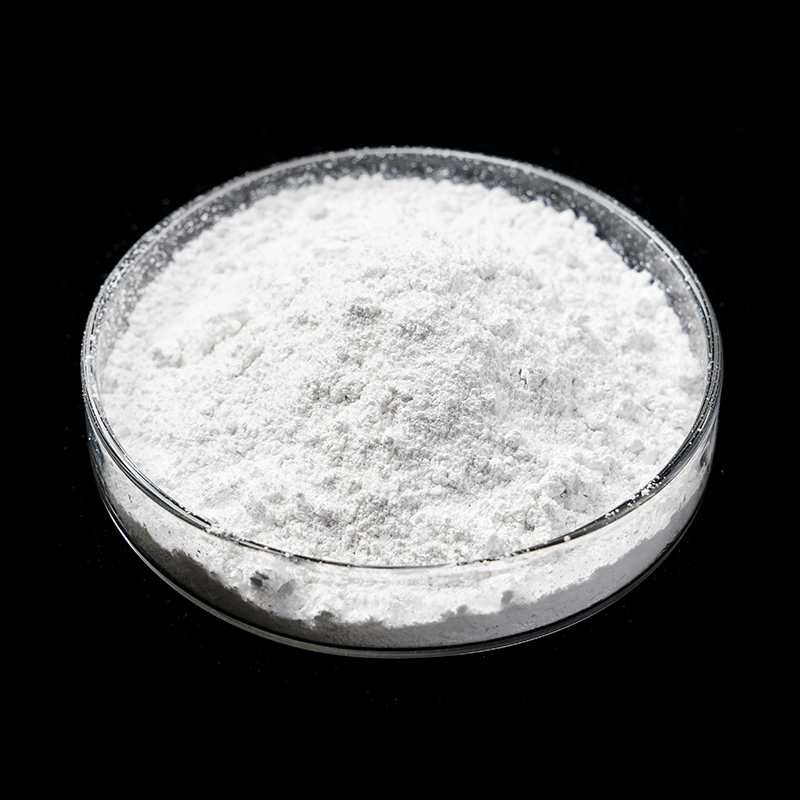 Ultra-Fine High-Purity Synthetic Magnesium Hydroxide ZF-21 Suppliers, Factory - Jiangsu Zhuofeng New Materials Technology Co., Ltd. - Custom Ultra-Fine High-Purity Synthetic Magnesium Hydroxide ZF-21 Suppliers and Fac...View Product →
Purity and particle size are the next decisions. Trace iron, sodium, and chloride affect volume resistivity and tracking resistance, so electrical cable and cable harness applications call for controlled-purity grades. An ultrafine electrical-grade aluminium hydroxide with tightly managed impurity levels is designed for exactly this situation.
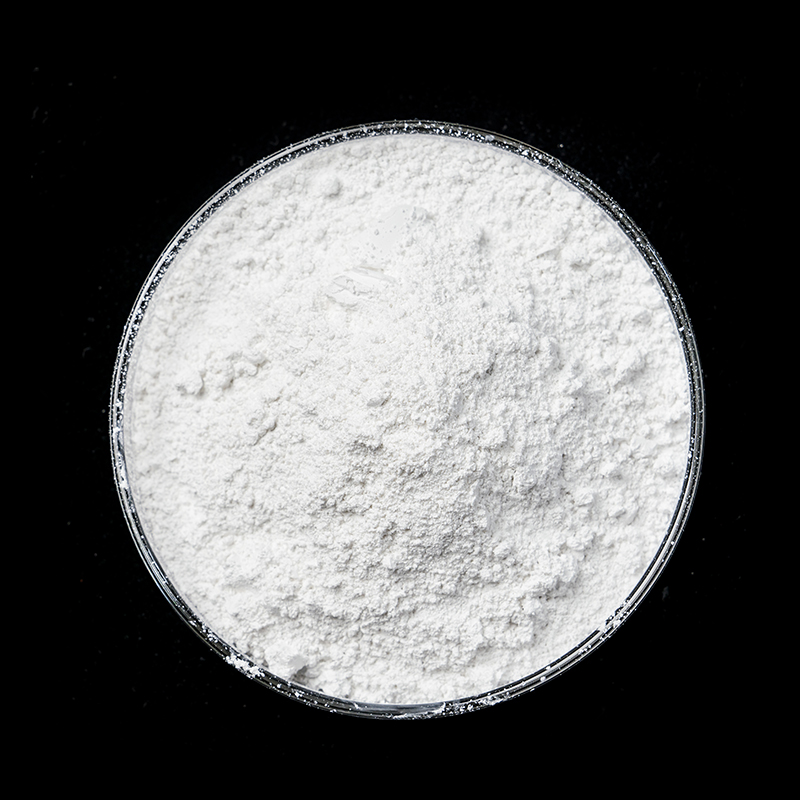 Ultra-Fine Electrical-Grade Flame-Retardant Aluminium Hydroxide ZF-102 SuppliersJiangsu Zhuofeng New Materials Technology Co., Ltd. - Custom Ultra-Fine Electrical-Grade Flame-Retardant Aluminium Hydroxide ZF-102 Suppl...View Product →
| Compound | Decomposition range | Main fire-safety action | Typical polymers | Typical loading |
|---|---|---|---|---|
| Aluminium hydroxide | ~180-220 °C | Endothermic water release; alumina barrier | PVC, EVA, polyolefins, coatings | 40-60 wt% |
| Synthetic magnesium hydroxide | ~300-340 °C | Endothermic water release; magnesia barrier | PP, PA, TPE, rubber | 40-60 wt% |
| Brucite (natural Mg(OH)2) | ~300-340 °C | Endothermic water release; magnesia barrier | PP, cable, conveyor belting | 45-65 wt% |
| Hydromagnesite | ~250-500 °C (staged) | Water and CO2 release; oxide-carbonate residue | Plastics processed at intermediate temperatures | 40-60 wt% |
Before finalizing a formulation, confirm the decomposition profile of the candidate grade with a thermogravimetric analysis and compare it with the actual melt temperature of your compound. Request the complete particle size distribution, not just a single d50 value, and check the certificate for moisture, iron, sodium, and chloride. These four parameters account for most performance surprises in production.
Where single substance flame retardants are used
These compounds appear in industries where halogen-free behaviour, smoke density, and cost stability matter as much as the fire rating itself.
- Wire and cable. Insulation and sheathing compounds use high loadings of ATH or MDH to meet IEC 60332 or similar requirements without halogens.
- Heat shrink tubing. Thin-wall tubing needs fine-particle hydroxides that survive stretching and orientation without surface defects.
- Engineering plastics. PA and PP parts for electrical enclosures, automotive connectors, and appliance housings rely on MDH or brucite for V-0 behaviour.
- Firefighting equipment. Hoses, nozzles, and housings need flame retardancy plus resistance to UV and abrasion.
- Plastic-wood profiles. Mineral hydroxides double as filler, improving fire behaviour and dimensional stability at a competitive cost.
In high-volume building and outdoor products where cost per kilogram dominates, natural mineral options come into their own. A cost-effective halogen-free brucite magnesium hydroxide can serve as both flame retardant and filler, which is why it appears frequently in plastic-wood formulations.
Cost-Effective Halogen-Free Brucite Magnesium Hydroxide ZF-73 Suppliers, FactoryJiangsu Zhuofeng New Materials Technology Co., Ltd. - Custom Cost-Effective Halogen-Free Brucite Magnesium Hydroxide ZF-73 Suppliers and ...View Product →What to verify before you buy
Because the single compound carries the whole fire-safety function, small differences in quality have outsized consequences. Ask the supplier for these five items:
- A thermogravimetric curve that matches your processing window.
- A complete particle size distribution, not just a d50 value.
- A certificate of analysis covering iron, sodium, chloride, and moisture.
- Test results in the actual base polymer at the intended loading against the target standard, such as UL 94 or IEC 60332.
- A written commitment on batch-to-batch consistency for the specific grade.
A supplier with an application testing laboratory can generate that data quickly and adjust the grade if the first trial fails. We discuss the practical side of this selection process in more detail in our review on optimizing fire safety with custom single-substance flame retardants.
One compound can keep a product fire-safe, provided the processing temperature, loading window, and grade quality are respected. Start with the polymer's melt temperature, define the required fire standard, and then evaluate candidate grades with real compounding and burn tests. In most cases, the simplest formulation is also the one that is easiest to qualify, purchase, and reproduce.
PREV:Industrial Fire Retardants Suppliers: How to Choose the Right Partner for You
NEXT:Bulk Wholesale Brucite Powder: How to Choose Grades and Suppliers
NEXT:Bulk Wholesale Brucite Powder: How to Choose Grades and Suppliers
Interested in cooperation or have questions?
Featured Products

Let'S Work Together Welcome Aboard!
-
Oversea Sales: mayuqin@zhuofengfr.com
Company email: rikkima@zhuofengfr.com
-
WhatsApp: +86 18105180388
-
Address: No. 5, Wutai Road, Dongba Street, Gaochun District, Nanjing City, Jiangsu Province, China
Join Our Mailing List
Product Categories
Quick Links
Quick Links
Copyright © Jiangsu Zhuofeng New Materials Technology Co., Ltd.
All Rights Reserved.
 Environmentally Friendly Flame Retardants Manufacturers
Environmentally Friendly Flame Retardants Manufacturers