
 English
 Tiếng Việt

Why Did Jiangsu Zhuofeng Exhibit Flame Retardants at ACLE 2026 in Shanghai?
Why Did Jiangsu Zhuofeng Exhibit Flame Retardants at ACLE 2026 in Shanghai?
Why Did Jiangsu Zhuofeng Exhibit Flame Retardants at ACLE 2026 in Shanghai?
Why Did Jiangsu Zhuofeng Exhibit Flame Retardants at ACLE 2026 in Shanghai?
Why Did Jiangsu Zhuofeng Exhibit Flame Retardants at ACLE 2026 in Shanghai?
Why Did Jiangsu Zhuofeng Exhibit Flame Retardants at ACLE 2026 in Shanghai?
Why Did Jiangsu Zhuofeng Exhibit Flame Retardants at ACLE 2026 in Shanghai?
Why Did Jiangsu Zhuofeng Exhibit Flame Retardants at ACLE 2026 in Shanghai?
Why Did Jiangsu Zhuofeng Exhibit Flame Retardants at ACLE 2026 in Shanghai?
Why Did Jiangsu Zhuofeng Exhibit Flame Retardants at ACLE 2026 in Shanghai?
Why Did Jiangsu Zhuofeng Exhibit Flame Retardants at ACLE 2026 in Shanghai?
Why Did Jiangsu Zhuofeng Exhibit Flame Retardants at ACLE 2026 in Shanghai?
Why Did Jiangsu Zhuofeng Exhibit Flame Retardants at ACLE 2026 in Shanghai?
Why Did Jiangsu Zhuofeng Exhibit Flame Retardants at ACLE 2026 in Shanghai?
Why Did Jiangsu Zhuofeng Exhibit Flame Retardants at ACLE 2026 in Shanghai?
Why Did Jiangsu Zhuofeng Exhibit Flame Retardants at ACLE 2026 in Shanghai?

Industry News
Home / News / Industry News / Why Did Jiangsu Zhuofeng Exhibit Flame Retardants at ACLE 2026 in Shanghai?
Product Category
NEW Category
Featured NEWS
- Green Flame-Retardant New Core: Efficient and Environmentally Friendly Char-forming Agent Facilitates the Upgrading of Halogen-Free Flame-Retardant Technology.
- Optimizing Fire Safety with Custom Single Substance Flame Retardants
- How One Compound Can Keep Products Fire-Safe | Single Substance Flame Retardants
Why Did Jiangsu Zhuofeng Exhibit Flame Retardants at ACLE 2026 in Shanghai?
Content
Jiangsu Zhuofeng Joins ACLE 2026 in Shanghai
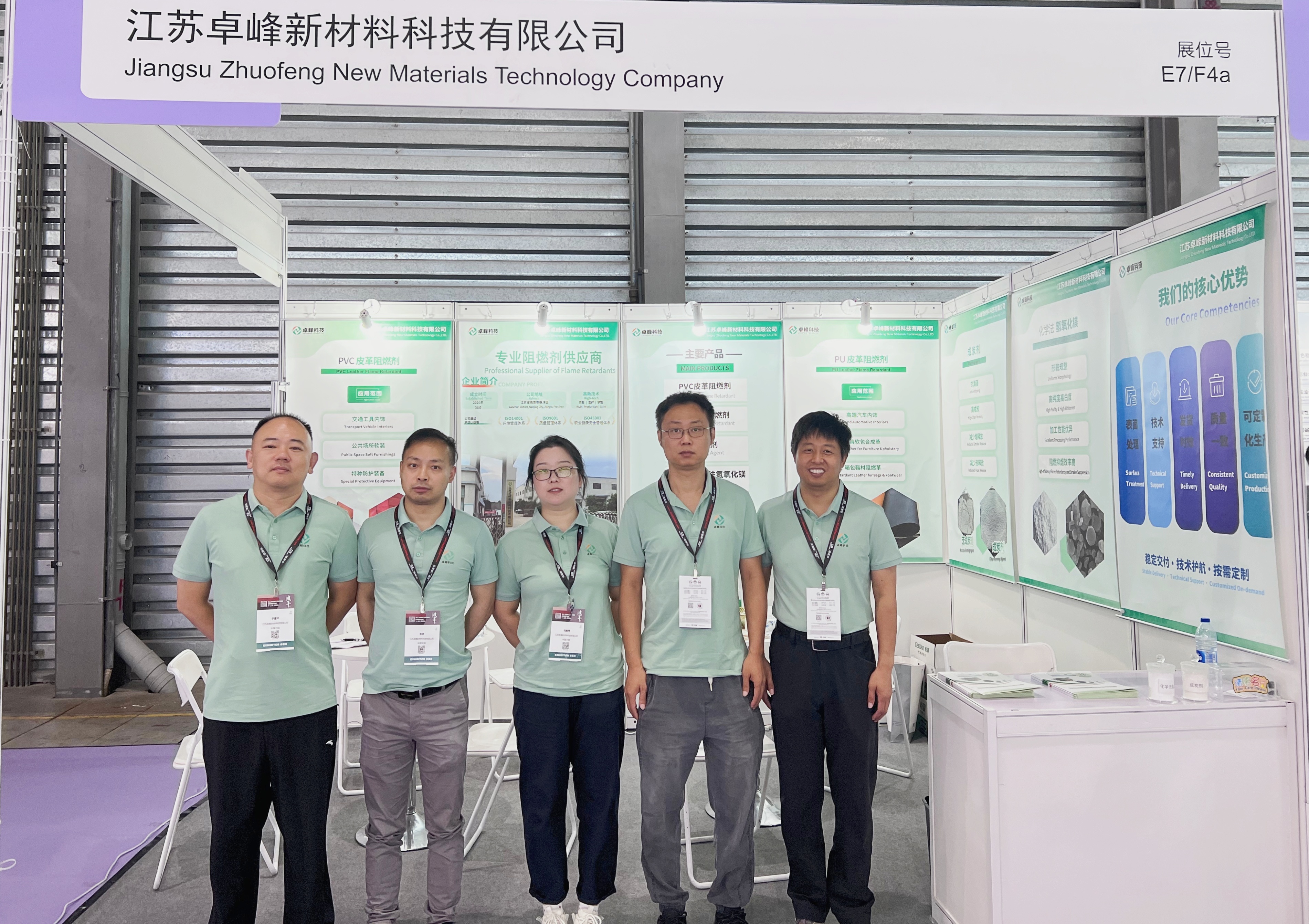
From September 1 to 3, 2026, Jiangsu Zhuofeng New Materials Technology Company took part in the 26th All China Leather Exhibition (ACLE), held at the Shanghai New International Expo Centre. Widely regarded as the barometer of the global leather industry, ACLE 2026 brought together more than 1,100 exhibitors from over 30 countries and regions across roughly 92,000 square meters of exhibition space, drawing tens of thousands of professional buyers from China's leading tanning, footwear, and leather goods manufacturing regions.
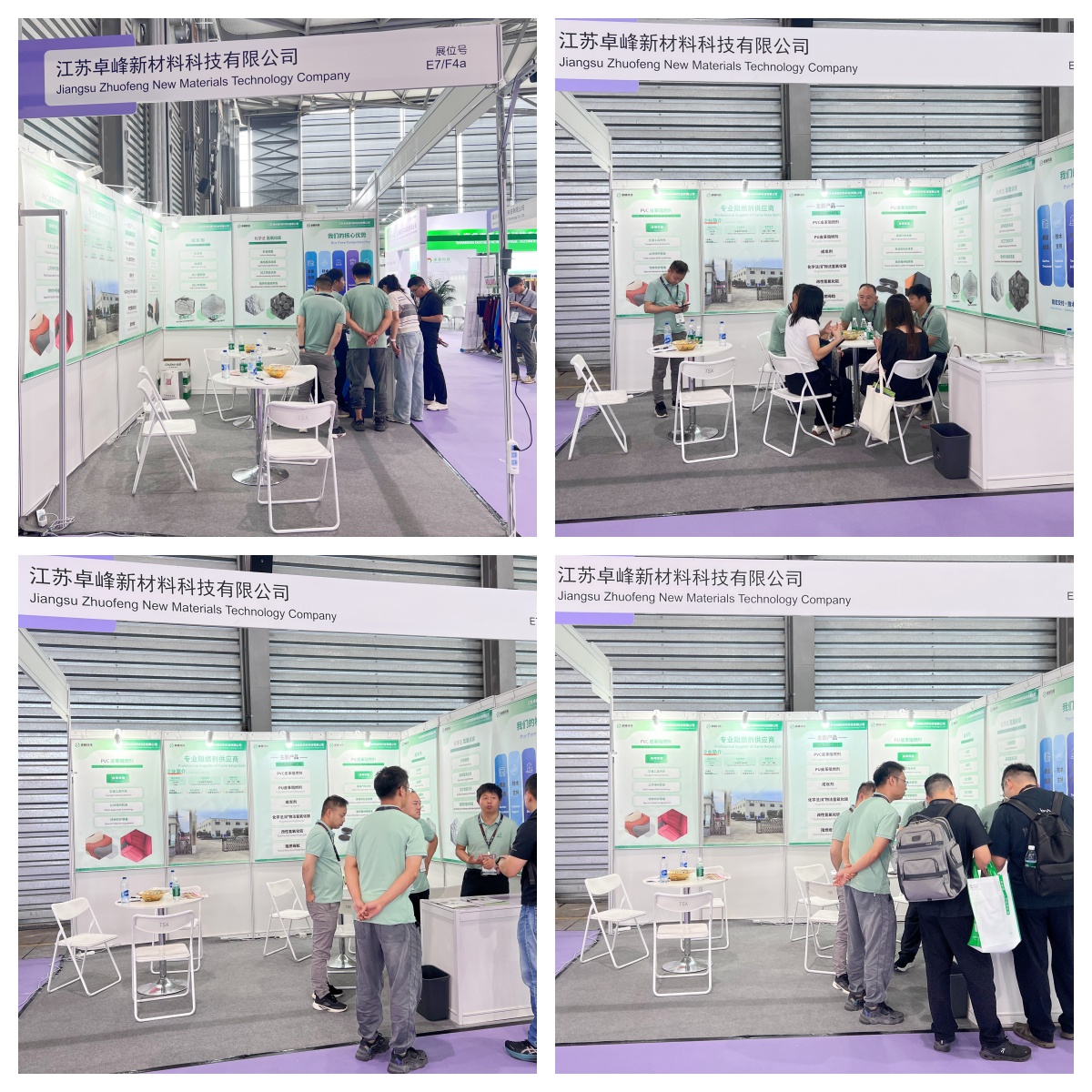
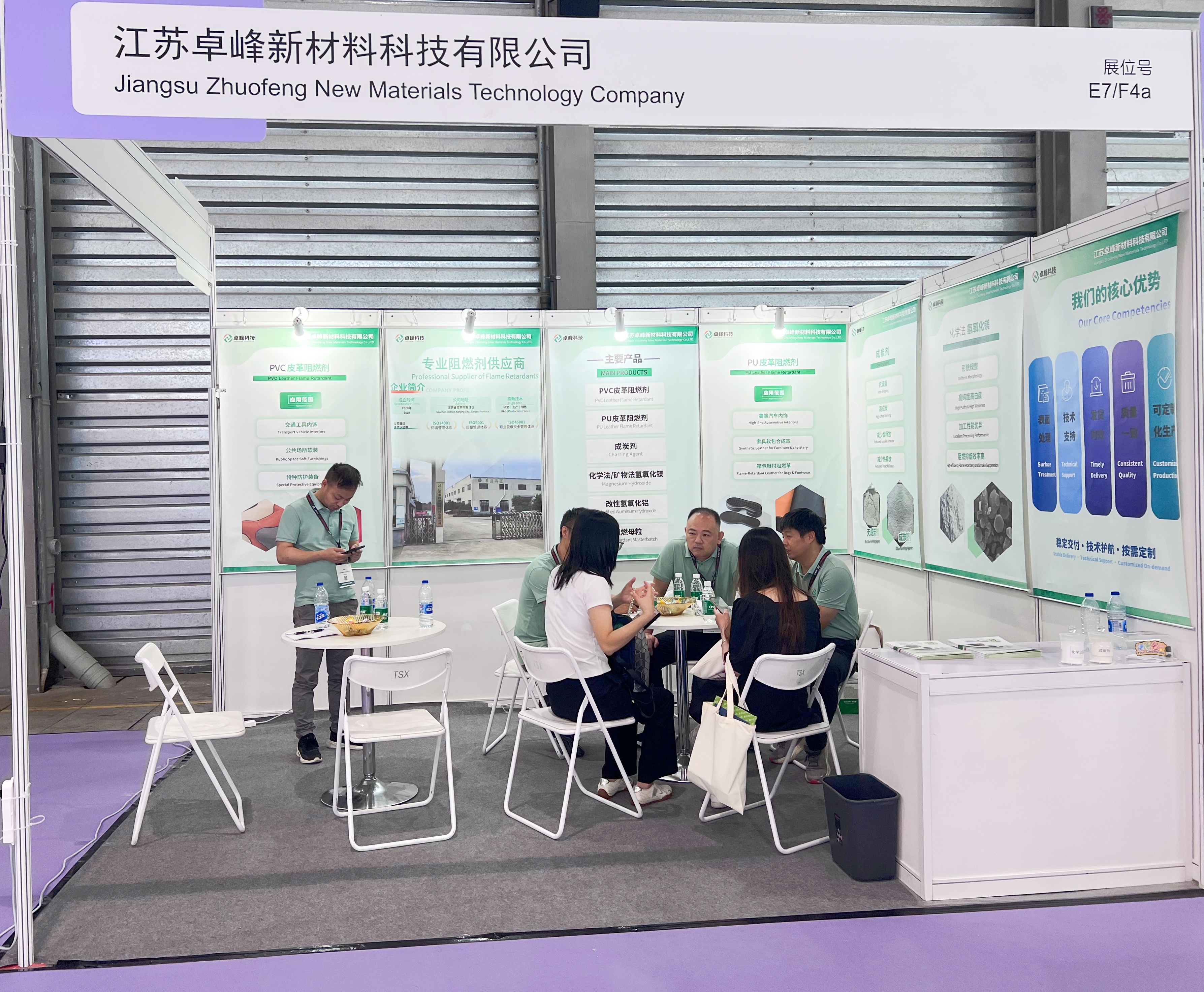
At booth E7/F4a, the Jiangsu Zhuofeng team presented its core product lines of flame retardants for PVC and PU synthetic leather, positioning the company as a professional supplier serving the flame-retardant needs of the broader leather and synthetic leather supply chain. Over the three-day event, the booth saw a steady flow of visitors, including manufacturers, purchasing teams, and technical staff seeking updates on flame-retardant performance and formulation support for their own production lines.
Why Flame Retardancy Is a Growing Focus for Synthetic Leather
Synthetic leather made from PVC and PU is used across furniture, automotive interiors, footwear, and luggage, and each of these markets is tightening its fire-safety expectations. Automotive interior suppliers, for example, need materials that pass horizontal burn tests while also controlling smoke and fogging, and contract furniture manufacturers are increasingly asked to meet open-flame and cigarette-ignition resistance standards for hospitality and public-space projects. This shift has pushed many leather and synthetic leather producers to look more closely at the flame-retardant systems built into their materials rather than treating fire performance as an afterthought.
This is also why the ACLE organizers dedicated attention this year to green, low-carbon, and functional materials as a central theme of the show. Buyers walking the halls were not just comparing leather textures and colors; they were asking pointed questions about compliance, smoke density, and long-term durability. It is exactly this kind of technical conversation that Jiangsu Zhuofeng aimed to support at its booth, offering visitors direct access to formulation guidance rather than only a product catalog.
Product Highlights on Display
PVC Leather Flame Retardants
For PVC-based synthetic leather, the exhibited additive systems are formulated to work with the material's plasticizer package, reducing smoke generation and suppressing melt-dripping without compromising the softness or hand feel that PVC leather is valued for. Visitors interested in furniture upholstery and automotive trim applications reviewed sample panels and technical data sheets covering loading levels and processing compatibility.
PU Leather Flame Retardants
Because PU is inherently more flammable and prone to dripping when burned, the PU-focused flame retardants on display were built to raise the material's limiting oxygen index while controlling drip behavior during combustion. This line drew interest from footwear and bag manufacturers looking to meet baseline self-extinguishing requirements without adding excessive stiffness to the finished leather.
- Flame retardants for PVC synthetic leather
- Flame retardants for PU synthetic leather
- Application support materials and technical consultation for formulators
Direct Conversations with Buyers and Manufacturers
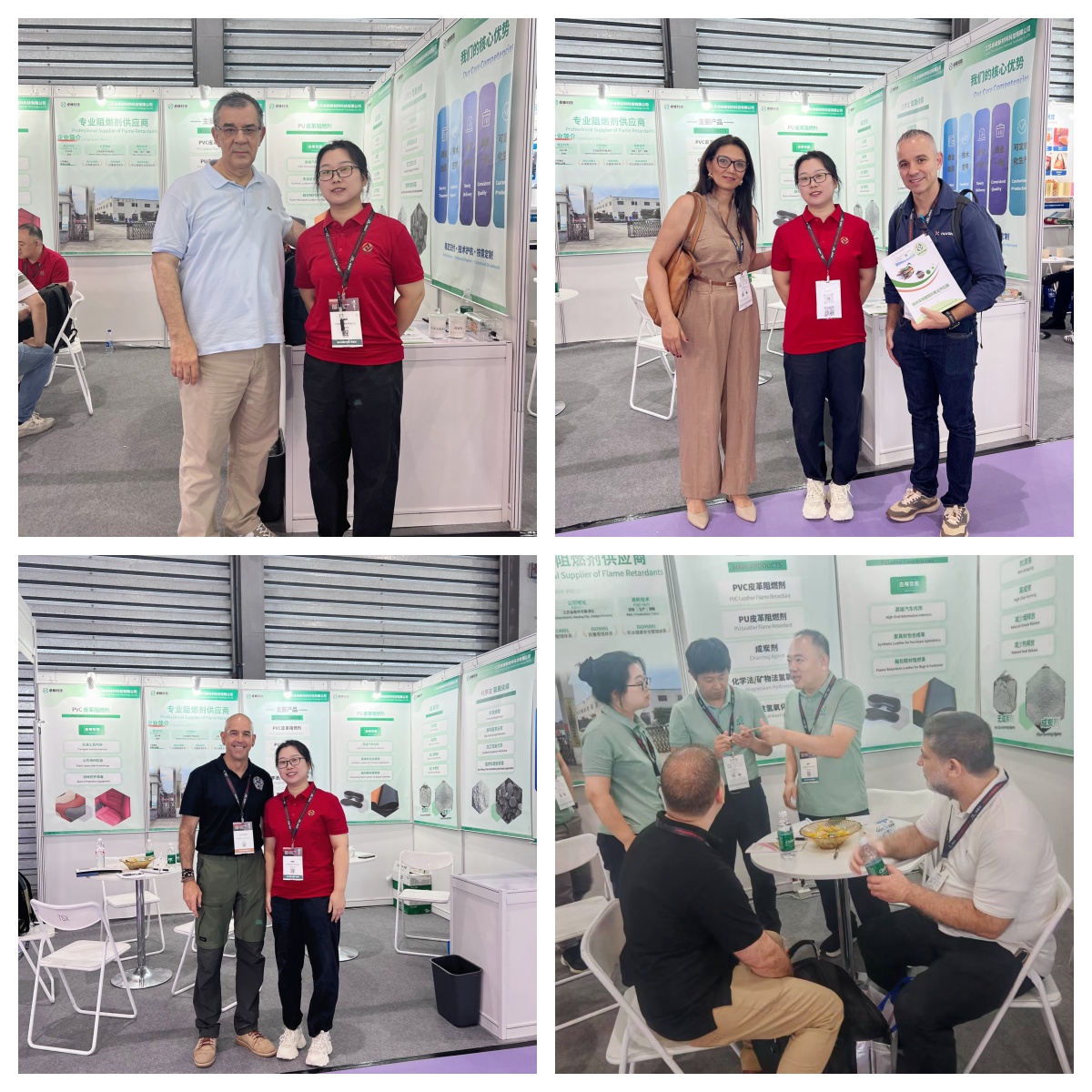
Trade shows like ACLE remain valuable precisely because they allow technical teams to sit down together rather than exchange specification sheets over email. Throughout the three days, staff from Jiangsu Zhuofeng met with representatives from leather goods manufacturers, footwear brands, and material distributors, walking through sample performance, discussing loading ratios for specific end uses, and fielding questions about compliance with regional flammability standards.
Several visitors asked about migration resistance and long-term stability of flame retardant additives, a common concern for buyers who have previously dealt with blooming or surface discoloration issues after storage. These face-to-face discussions gave the team a chance to explain how molecular weight and compatibility with plasticizer systems affect migration behavior, and to point interested visitors toward the appropriate product grade for their specific base resin and application.
What This Participation Means Going Forward
Participating in ACLE 2026 gave Jiangsu Zhuofeng a direct read on where the leather and synthetic leather industry is heading: buyers are asking more detailed technical questions, sustainability and low-smoke performance are becoming baseline expectations rather than premium features, and manufacturers want suppliers who can support formulation troubleshooting, not just ship raw material. This lines up with the broader industry trend noted at the show, where China's leather sector reported total sales revenue of about 750 billion yuan in 2025, alongside continued expansion into new consumption scenarios such as automotive and home furnishing interiors.
The connections made at booth E7/F4a will feed directly into ongoing customer support and, in some cases, new formulation collaborations already under discussion. For manufacturers who were unable to attend the show or who want to follow up on a conversation started at the booth, the company's flame retardant product lines for PVC and PU synthetic leather remain available for inquiry and sample testing beyond the exhibition dates.
PREV:Triethyl Phosphate: Properties, Flame Retardant Uses, and Modern Alternatives
NEXT:Flame Retardant Formulations: How to Choose the Right Additive System for Polyme
NEXT:Flame Retardant Formulations: How to Choose the Right Additive System for Polyme
Interested in cooperation or have questions?
Featured Products

Let'S Work Together Welcome Aboard!
-
Oversea Sales: mayuqin@zhuofengfr.com
Company email: rikkima@zhuofengfr.com
-
WhatsApp: +86 18105180388
-
Address: No. 5, Wutai Road, Dongba Street, Gaochun District, Nanjing City, Jiangsu Province, China
Join Our Mailing List
Product Categories
Quick Links
Quick Links
Copyright © Jiangsu Zhuofeng New Materials Technology Co., Ltd.
All Rights Reserved.
 Environmentally Friendly Flame Retardants Manufacturers
Environmentally Friendly Flame Retardants Manufacturers